


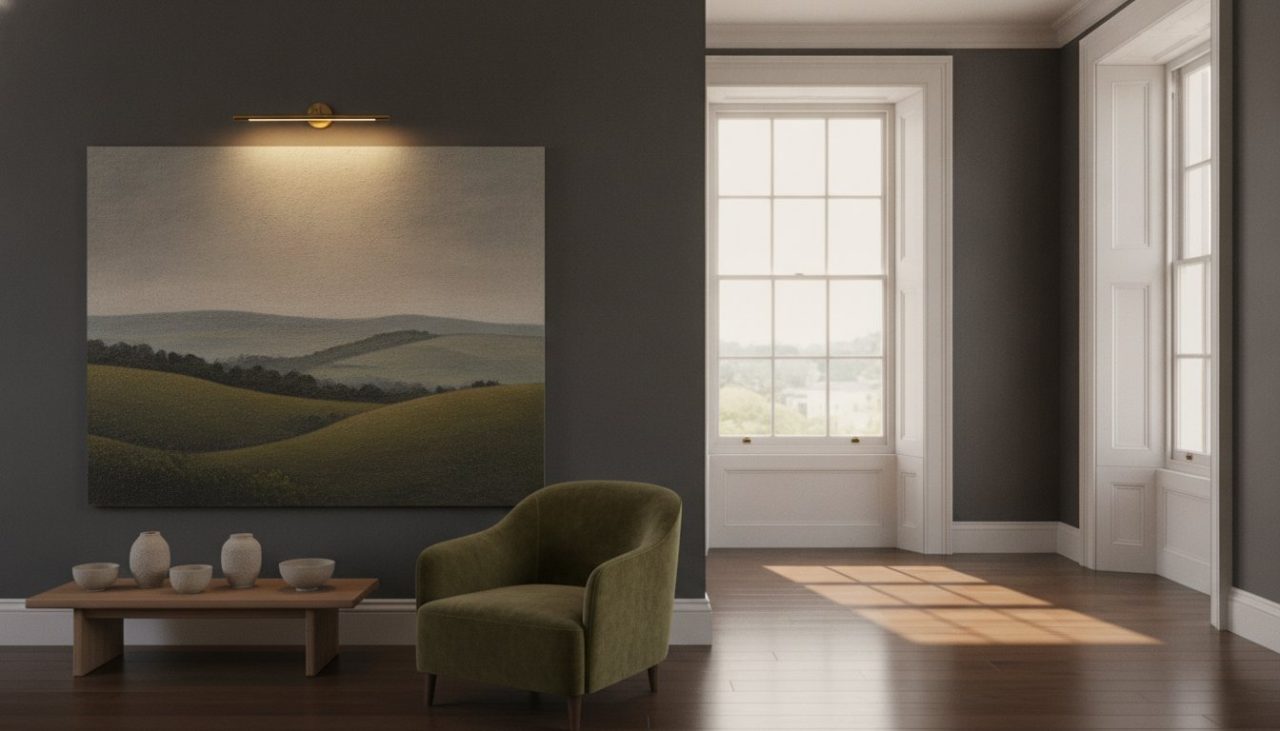
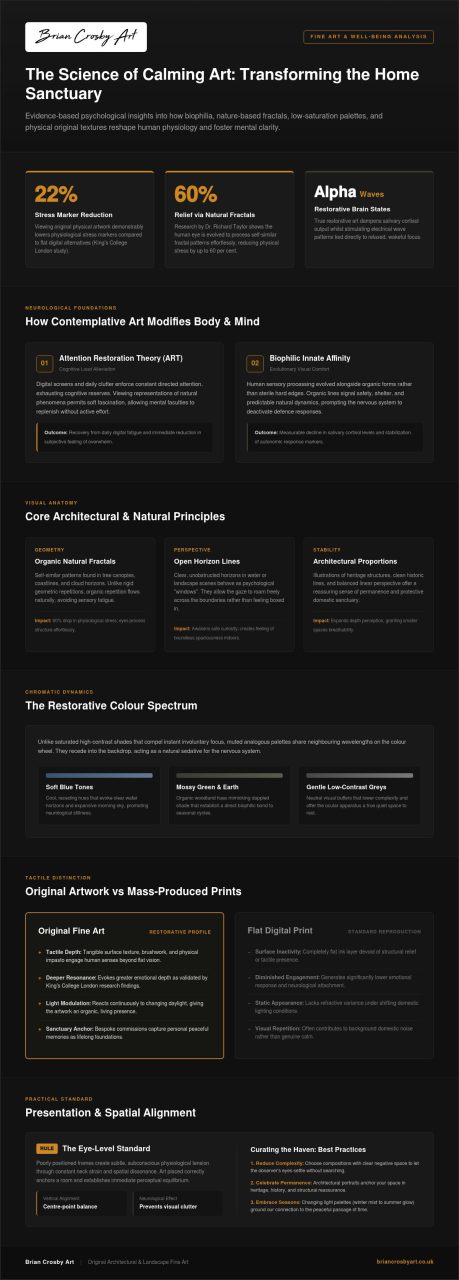
Did you know that viewing original artwork can lower your physiological stress markers by as much as 22 per cent? A study led by King’s College London found that the human brain responds with far greater emotional depth to the texture and soul of a physical painting than to a flat digital print. It is a striking reminder that what we choose to hang on our walls does more than just fill a gap; it shapes our internal landscape.
We all recognise that feeling of coming home to a space that feels cluttered or “loud,” where the visual noise only adds to the weight of a busy day. You likely want a home that feels like a retreat, yet choosing art that creates a calming atmosphere can feel daunting when you are worried about making a room feel too busy. This guide will show you how to select and place artwork that transforms your home into a sanctuary of peace and mental clarity. We will explore the restorative power of nature-based fractals, the gentle influence of colour theory, and the practical standards for hanging your pieces to ensure your environment remains a place of steady, quiet growth.
Key Takeaways
- Understand how biophilic patterns and organic forms in art can physically lower your stress levels and promote mental clarity.
- Discover why horizon lines in landscape paintings act as visual “windows” that provide a sense of space and stability.
- Learn how the tangible texture of original art that creates a calming atmosphere offers a deeper sensory connection than flat, mass-produced prints.
- Master the “eye-level rule” to hang your pieces at the perfect height, preventing the subconscious tension caused by poorly placed frames.
- Explore how bespoke commissions can turn a personal, peaceful memory into a permanent anchor for your home sanctuary.
The Psychology of Serenity: How Art Influences Our Mood
The way we perceive our surroundings is deeply rooted in our biology. When we speak about art that creates a calming atmosphere, we aren’t just discussing aesthetics; we’re talking about measurable physiological shifts. True restorative art helps to lower salivary cortisol levels and encourages the production of alpha brain waves, which are the electrical patterns associated with a relaxed, wakeful state. In a domestic setting, our brains often feel overstimulated by “loud” visual noise. Choosing pieces with lower visual complexity allows for “visual rest,” giving your eyes a soft place to land after a day of digital screens and cluttered schedules.
This connection is often described through the lens of Biophilia, our innate human desire to connect with nature. When we view organic forms, our cognitive load lightens. This process is a core component of attention restoration theory, which suggests that natural environments, or even visual representations of them, help us recover from mental fatigue. By bringing these elements into our homes, we find that art that creates a calming atmosphere acts as a silent partner in our daily well-being. Our eyes need rest. Our minds need space.
The Power of Colour Theory in Calm Spaces
Cooler palettes are the cornerstone of a tranquil home. Shades of soft blue, mossy green, and gentle grey act as natural sedatives for the nervous system. Unlike high-contrast, “loud” colours that demand immediate attention, low-saturation tones recede into the background, providing a quiet backdrop for thought. Analogous colours, which sit next to each other on the colour wheel, create a sense of visual harmony because they share similar wavelengths and don’t force the eye to jump between extremes.
Fractals and Patterns: Nature’s Secret to Relaxation
Nature isn’t random; it’s composed of fractals. These are self-similar patterns found in tree canopies, clouds, and coastlines. Research conducted by Dr. Richard Taylor suggests that the human eye is evolved to process these specific patterns effortlessly, reducing physiological stress by up to 60 per cent. While geometric repetition can feel rigid or clinical, organic, flowing patterns in a landscape painting offer a sense of movement that feels safe and familiar. This “fractal dimension” is why a traditional landscape often feels more restorative than a sharp, modern abstract piece. It feels natural. It feels right.
Choosing Subject Matter: Landscapes, Architecture, and Stillness
Selecting the right subject matter is about more than matching a sofa or filling a blank wall. It’s about finding a visual anchor for your thoughts. When you choose art that creates a calming atmosphere, you’re looking for a subject that invites the mind to wander without getting lost. Scientific insights into how aesthetic experiences alter brain chemistry show that certain vistas can trigger a sense of safety and curiosity simultaneously. “Open” compositions, where the viewer’s eye can travel freely to the edges of the frame, feel much more relaxing than “closed” scenes that feel boxed in or cluttered.
Landscape Art: Bringing the Outdoors In
Landscapes act as metaphorical windows. A clear horizon line suggests space and possibility, which is why water scenes or rolling hills are so popular for restorative rooms. Soft woodland light filtering through leaves creates a dappled effect that mimics the natural world’s gentle movement. When looking for original paintings for sale UK collectors often find that pieces reflecting the changing seasons help them feel more grounded. A winter mist or a summer glow connects us to the passage of time in a way that feels steady rather than rushed. These scenes offer a sense of perspective that reminds us of the world’s enduring beauty.
Architectural Illustration: The Beauty of Permanent Things
Architectural illustration offers a different kind of peace. It’s the beauty of permanent things. Clean lines and the sturdy proportions of heritage buildings provide a sense of stability. For many, commissioned house portraits UK serve as a celebration of home as a sanctuary. These works use perspective to create depth, making a small room feel significantly more breathable. They remind us of our history and the structures that protect us. If you’re looking to capture a specific memory or place of peace, you can explore my current original works for inspiration.
Still life and portraits also play a role by capturing a single, quiet moment in time. They encourage us to slow down and notice the small details; the way light hits a vase or the soft expression of a sitter. This stillness is essential for art that creates a calming atmosphere, as it provides a counterpoint to the fast-paced, often frantic nature of modern life. By choosing subjects that celebrate stability and space, you create a home that doesn’t just look better, but feels better too.
Original Art vs. Mass Prints: The Sensory Impact of Texture
Many homeowners overlook the physical presence of a piece when decorating. When you’re searching for art that creates a calming atmosphere, the surface of the work matters just as much as the subject itself. There’s a profound difference between a flat, glossy poster and a piece where you can see the “Artist’s Hand.” Those visible brushstrokes and subtle imperfections create an empathetic connection between the creator and the viewer. It’s a quiet reminder of the human touch, suggesting a pace of life that’s far removed from the rapid-fire nature of digital production.
Texture also plays a vital role in how a room feels throughout the day. The physical depth of paint interacts with your home’s lighting, catching the morning sun or softening in the evening glow. This creates a sense of gentle, natural movement as shadows shift across the canvas. Investing in original art isn’t just about financial value; it’s an investment in your daily well-being. It provides a tactile, grounded energy that helps to anchor a room, making it feel like a lived-in sanctuary rather than a showroom.
The Tangible Quality of Traditional Mediums
Different mediums offer unique sensory benefits. Watercolour’s transparency allows the light of the paper to shine through, creating a luminous, airy feel that’s perfect for bedrooms. In contrast, the richness of oil or acrylic provides a deeper, more immersive experience that can feel very grounding in a study or lounge. The choice of material also affects how light is reflected. High-quality canvas and heavy-weight papers absorb light, which significantly reduces glare. This is essential for maintaining a restful environment, as harsh reflections can be subtly agitating to the eyes. Whilst a digital print replicates a scene, an original piece carries the soul of the creative process, offering a depth that flat mass-production simply cannot mirror.
Why Limited Editions Offer a Middle Ground
You don’t always need an original painting to achieve a restorative effect. High-quality limited edition fine art prints provide a wonderful alternative to mass-market posters. These prints are created using archival-grade materials, ensuring that the colours remain true for decades. Fading art often creates a subconscious sense of neglect, whereas archival prints preserve the artist’s original intent and energy. By choosing numbered editions, you’re still connecting with a curated, intentional piece of work rather than a commercial product. Using a mix of originals and prints is a fantastic way to organise a home that feels both personal and peaceful.
Curating Your Sanctuary: Placement and Presentation
Hanging your artwork at the correct height is the first step in creating a restorative space. Professional galleries typically set the vertical centre point of a piece at 57 to 60 inches from the floor. This standard reflects average human eye level and prevents the subconscious physical tension caused by looking too far up or down. When art is placed near furniture, such as a sofa or console table, the bottom of the frame should sit approximately 4 to 8 inches above the surface. Aim for the artwork’s width to be between 60 and 75 per cent of the furniture beneath it to maintain visual harmony.
Our eyes seek balance. Negative space, or the “breathing room” around a piece, is essential for art that creates a calming atmosphere. If a wall is too crowded, the brain struggles to process the information, leading to cognitive fatigue. By allowing ample space around a single focal point, you invite the viewer to linger and reflect. Lighting is the final touch for tranquillity. Avoid harsh overhead glares by using soft, warm directional light. Professional standards recommend a Correlated Colour Temperature of 2700K to 3000K and a Colour Rendering Index of 90 or higher to ensure the pigments appear natural and soothing.
Bespoke Framing as a Tool for Calm
The frame acts as a boundary that contains the energy of the work. For a peaceful aesthetic, choose natural wood like oak or ash, or neutral tones that don’t compete with the art. A wide mount, or mat, provides a vital visual buffer between the artwork and the wall, helping the piece to stand out without feeling forced. This thoughtful presentation ensures your investment feels like a permanent part of the room. For a professional finish that protects your pieces for years to come, you can find expert help through creative framing services Gloucestershire.
Room-Specific Art Strategies
Each room serves a different purpose for your well-being. In the bedroom, choose art that creates a calming atmosphere with soft horizons and minimal detail to aid the transition to sleep. The home office benefits from architectural or structured art, which fosters a sense of “calm focus” and stability during the workday. In the living room, you can create a “gallery of peace” by balancing different sizes of work in a rhythmic, orderly arrangement. To find the perfect piece for your sanctuary, explore my collection of original paintings and prints.
Commissioning Art: Creating Your Personal Escape
Sometimes, finding the perfect piece in a gallery isn’t quite enough to satisfy a specific vision. When you have a particular corner of your home intended for reflection, a bespoke commission allows you to choose the exact energy and palette required for that space. This process is deeply collaborative. It’s about more than just a transaction; it’s an opportunity to work with an artist to capture a favourite, peaceful memory. Whether it’s the specific light of a childhood coastal retreat or a beloved view from a window, a commission ensures you are investing in art that creates a calming atmosphere tailored specifically to your needs.
One of the most powerful ways to foster peace is by simplifying the visual world around us. Often, a photograph of a loved one might be cluttered with a busy background or harsh lighting. By commissioning a traditional portrait painting, you can strip away that chaos. An artist can translate that moment into a serene composition, focusing on character and warmth whilst removing the “noise” of the original snap. This creates a timeless anchor for your room that feels intentional and steady.
The Commissioning Journey
The journey from an initial sketch to the final protective varnish is a methodical and reassuring process. It begins with a conversation about the mood you wish to evoke. Communicating your desire for a “calming atmosphere” is vital; it helps the artist select the right medium and colour balance. You might prefer the airy transparency of watercolour or the rich, grounded texture of oils. By setting clear expectations for size and subject matter early on, the final work becomes a restorative power in your home, built on a foundation of mutual understanding and shared vision.
Preserving the Past for a Peaceful Future
Our history can also be a source of great comfort, yet many of our most precious memories are locked in damaged or fading photographs. Through professional image restoration, these stressful, deteriorating images can be transformed into serene heirlooms. There is a significant psychological benefit to seeing your family’s history preserved and beautifully presented. It provides a sense of continuity and stability that grounds a home. Ultimately, choosing or creating art that creates a calming atmosphere is not just about decoration. It is a long-term investment in your daily tranquillity and a gift to your future self.
Transform Your Home into a Sanctuary of Peace
Creating a restorative space is an intentional act of self-care that begins with what you choose to live with every day. We’ve explored how the right subject matter and the tactile “artist’s hand” can physically lower stress, whilst precise placement prevents subconscious tension. By choosing quality over visual noise, you ensure your walls offer a steady sense of peace rather than distraction.
Whether you’re looking for a landscape that acts as a window to nature or a bespoke architectural study, selecting art that creates a calming atmosphere is a long-term investment in your mental clarity. As a Member of the Society of Architectural Illustrators, I’m dedicated to helping you find or create pieces that resonate with your personal history. From expert bespoke framing to tailored commissions and restoration, every service is designed to support your restorative journey.
Explore Brian Crosby’s original paintings and find your sanctuary
Your home should be a place where you can breathe deeply and feel truly at rest. It’s a joy to help you curate a space that nourishes your soul and provides a quiet anchor for your daily life.
Frequently Asked Questions
What are the best colours for art that creates a calming atmosphere?
The most effective hues for art that creates a calming atmosphere are found in the cooler end of the spectrum. Soft blues, sage greens, and muted greys have a naturally sedative effect on the nervous system. These low-saturation tones recede visually, preventing the room from feeling “loud” or overstimulating. You should avoid high-contrast combinations, instead opting for analogous colour schemes that provide a sense of visual harmony and steady, quiet growth.
Can abstract art be calming or is it too busy?
Abstract art can be deeply restorative provided it avoids sharp, geometric repetition or high-contrast clashes. Minimalist abstracts that utilise soft colour transitions and plenty of negative space allow the mind to rest rather than puzzles it. When the composition feels fluid and open, it encourages a state of “soft fascination.” This type of work provides a gentle focal point that supports mental clarity without demanding the intense cognitive processing associated with busier scenes.
Where is the best place to hang peaceful art in a small house?
In smaller homes, the best placement is often at the end of a hallway or directly opposite a doorway to create a sense of depth. Using a landscape painting in these spots acts as a “visual window,” making the walls feel less restrictive. You should also consider hanging a peaceful piece in “transition zones,” such as the entryway, to immediately signal a shift from the outside world to your private sanctuary.
How does lighting affect the calming quality of a painting?
Lighting is crucial for maintaining the emotional resonance of a piece. Harsh, cool-toned lights can make pigments look clinical or distorted. Instead, use soft, warm directional lighting with a colour temperature between 2700K and 3000K. Ensuring your fixtures have a Colour Rendering Index (CRI) of 90 or higher will present the artist’s chosen colours accurately. This approach minimises glare and creates a gentle, immersive experience as the sun sets and shadows shift.
Is it better to have one large piece of art or a gallery wall for relaxation?
For a truly restorative space, one large, “open” piece is generally more effective than a busy gallery wall. A single focal point reduces the amount of visual information your brain needs to process, which helps to lower cognitive fatigue. Whilst gallery walls can be charming, they often feel “loud” in smaller rooms. A singular, well-placed painting provides a quiet anchor that encourages the eye to linger and the mind to settle at its own pace.
How do I choose between a landscape and an architectural drawing for my office?
Your choice depends on the type of “calm” you need. Landscapes offer a sense of escape and possibility, which is ideal if your work feels restrictive or stressful. Conversely, architectural drawings provide a sense of stability and clean structure. This “ordered calm” can be incredibly grounding during complex projects. Many professionals find that the sturdy lines of a heritage building foster a sense of “calm focus” that aids productivity without adding unnecessary pressure.
What framing materials are most suitable for a tranquil aesthetic?
Natural materials are best for maintaining a tranquil aesthetic. Unstained oak, ash, or maple frames provide a warm, organic border that doesn’t distract from the artwork. You should also utilise a wide, neutral-toned mount to provide a visual “buffer” between the piece and the wall. This “creative framing” technique contains the energy of the work and ensures the transition from the wall to the art feels soft, intentional, and balanced.
Why does original art feel more peaceful than a mass-produced poster?
Art that creates a calming atmosphere often relies on the tactile “Artist’s Hand.” Original paintings possess a physical depth and texture that mass-produced posters lack. As room lighting changes throughout the day, the shadows cast by actual brushstrokes create a sense of gentle, living movement. This authentic human connection registers more deeply in our biology than a flat digital reproduction, triggering a stronger parasympathetic response and a genuine sense of appreciation for the creative process.