



Imagine sitting in your favourite armchair and looking up to see the very walls around you captured in a delicate wash of ink and light, preserving every quirk and memory of your family home. You likely feel that your home is far more than just bricks and mortar; it’s a vessel for your history and a sanctuary for your family. However, the idea of arranging architectural illustration commissions can feel overwhelming if you aren’t sure where to start. You might worry about providing the right reference photos, or perhaps you’re unsure how to ensure the final piece captures the true “character” of the building rather than just its cold dimensions.
This guide simplifies the process, helping you navigate the journey from a simple photograph to a high-quality, hand-crafted original. We’ll explore the vital differences between digital and hand-drawn art, whilst providing clear steps to ensure a smooth, collaborative experience with your artist. By the end, you’ll understand how to secure a legacy item that your family will cherish for generations. Whether it’s a first home or a grand historic estate, your story deserves to be told with the quiet confidence and atmospheric beauty that only professional fine art can provide.
Key Takeaways
- Understand how architectural illustration commissions blend technical accuracy with artistic soul to turn a house into a timeless family heirloom.
- Learn how to select the perfect medium, such as a soft watercolour wash or crisp pen and ink, to complement your building’s unique period features.
- Discover the collaborative steps involved in a professional commission, moving from your initial vision to a formal agreement that protects your investment.
- Gain practical tips on capturing the best reference photographs, focusing on natural light and angles that reveal the true character of your home.
- Identify the hallmarks of a professional illustrator, including the importance of technical perspective and membership in the Society of Architectural Illustrators.
The Value of Bespoke Architectural Illustration Commissions
Architectural illustration is a unique discipline that sits at the intersection of rigorous technical draughtsmanship and sensitive artistic interpretation. It’s far more than a clinical record of a building’s dimensions; it’s a portrait of a place that captures its soul. When you explore architectural illustration commissions, you’re looking for a way to preserve the spirit of a building that a standard photograph often misses. Whether it’s the family home where you raised your children, a cherished wedding venue, or a local heritage landmark, these pieces act as a bridge between memory and reality.
The emotional significance of a bespoke piece can’t be overstated. Unlike mass-produced prints or digital files that sit forgotten on a phone, an original commission carries a weight of intention. It’s a thoughtful way to honour a lifetime of memories, making it a truly unique gift for anniversaries, retirements, or significant milestones. It tells the recipient that their history is worth recording in a beautiful, permanent form.
Capturing Character Beyond the Camera
An artist’s eye can do what a camera lens cannot. It can “clean up” a scene, gently omitting modern distractions like wheelie bins, parked cars, or unsightly telephone wires that clutter a view. I can adjust the lighting to bathe a facade in the warm glow of a summer sunset, even if the reference photo was taken on a grey winter morning. This atmospheric quality brings a sense of life and movement to the page. Hand-drawn lines have a rhythmic pulse; they suggest the texture of weathered stone or the shimmer of old glass in a way that feels organic and deeply personal.
Original Art as a Modern Family Heirloom
There’s a beautiful, tactile quality to high-quality paper and professional-grade pigments that digital art simply can’t replicate. The way the ink bites into the grain of the paper or how watercolour washes settle into the surface creates a physical presence you can feel. Investing in architectural illustration commissions ensures you receive a legacy item that preserves the history of a property for future generations.
- Hand-crafted originals use lightfast materials to ensure the colours remain vibrant for decades.
- Physical art provides a tangible connection to the past that grows more precious as the years pass.
- Custom framing can further protect the piece, turning it into a centrepiece for your home.
In an age of fleeting digital pixels, a physical, hand-drawn illustration stands as a permanent testament to the places that have shaped our lives.
Choosing the Right Style: Watercolour, Ink, or Mixed Media?
Selecting the right medium is a pivotal step in the creative journey. It’s about finding a visual language that speaks to the soul of the building. Whilst some structures demand the crisp precision of a fine-line pen, others are better served by the fluid, ethereal nature of a watercolour wash. Professional standards, such as those upheld by the American Society of Architectural Illustrators (ASAI), often highlight how different techniques can drastically alter the narrative of a piece. When you’re exploring architectural illustration commissions, thinking about the visual impact of colour versus the classic feel of ink is a great starting point.
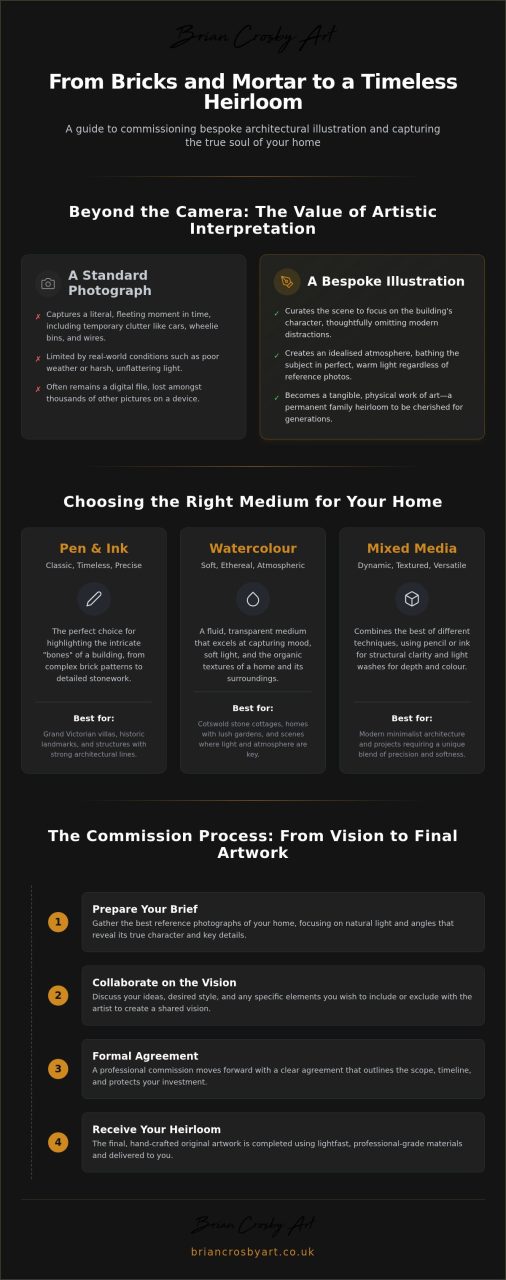
The style of your building often provides the best clues for which medium to choose. A grand Victorian villa with intricate terracotta tiling often shines in pen and ink, as the sharp lines capture the complexity of the era’s craftsmanship. Conversely, a Cotswold stone cottage with its honey-coloured walls and rambling garden feels most at home in watercolour. Modern, minimalist architecture might benefit from a mixed-media approach, using pencil for structural clarity and light washes for depth. Each choice creates a different emotional resonance for the viewer.
The Classic Appeal of Pen and Ink
There’s an undeniable permanence to black and white ink. It’s the perfect choice for highlighting the “bones” of a building. Fine nibs allow for incredible detail in stonework and brick patterns, creating a timeless, archival feel that looks stunning in a traditional study or hallway. By applying an ink wash, I can introduce subtle shadows that give the drawing a three-dimensional weight. This technique makes the structure pop from the page, emphasising its strength and history without the distraction of colour.
Watercolour: Adding Life and Atmosphere
Watercolour brings a sense of breath and light to architectural illustration commissions. It’s less about the exact placement of every brick and more about the feeling of the place. It’s ideal for residential house portraits where the surrounding landscape is just as important as the building itself. A wash of cerulean blue in the windows or a dash of sap green for the ivy can transform a drawing into a vibrant memory. It captures the specific hue of local stone and the way light dances across a facade at your favourite time of day.
Sometimes, the best results come from combining these worlds. Using ink for structural clarity and watercolour for atmospheric warmth provides a rich, textured finish that offers the best of both worlds. If you’re unsure which path to take, I’m always happy to look at your photos and offer my thoughts on which architectural commissions style would best suit your home’s unique character.
The Step-by-Step Process of Bringing Your Building to Life
Commissioning a bespoke piece of art is a shared adventure. It’s a structured path that ensures your vision translates perfectly onto the paper. When managing architectural illustration commissions, I focus on clear communication so you’re never left wondering about the next step. We begin with an initial consultation where we discuss the scale of the piece and your preferred medium, ensuring the chosen style aligns with the building’s history. This is also where we sign a formal agreement. It’s a professional step that protects your investment and outlines the scope of work, including details on licensing and usage rights.
From Initial Enquiry to First Sketch
Just as a clear agreement is vital for art, businesses in the manufacturing and engineering sectors require robust strategic planning to thrive; you can discover BCM Public Relations to learn about their frameworks for B2B marketing success.
Sharing your ideas is the first spark of the project. I’ll ask for reference materials, such as high-resolution photos or even historical maps of the property. We’ll decide on the “story” the piece should tell. Perhaps you want to focus on a grand entrance or capture the way the whole estate sits within the landscape. Looking at various architectural illustration styles can help clarify if you’d prefer something minimalist or a work rich with intricate detail. I’ll then set a realistic timeline. A complex Victorian facade with ornate stonework naturally takes longer to perfect than a contemporary home with clean, simple lines.
Refining the Details and Finalising the Piece
You’ll never be in the dark about the progress. Once the initial pencil sketch is ready, we’ll have a check-in. This is a vital stage for your feedback. We can adjust the “character” of the building, perhaps tweaking the height of a chimney or the curve of a path. It’s much easier to make changes in pencil than once the permanent layers are applied. Following your approval, I move on to the final stages. This involves the steady application of lightfast ink or the delicate layering of professional-grade watercolour washes.
- Pencil Stage: The blueprint where we confirm perspective and composition.
- Ink/Colour Stage: Adding the depth, texture, and atmospheric light.
- Final Reveal: A high-resolution digital preview before the physical piece is prepared.
Once the work is complete and the final payment is settled, your artwork is carefully packaged for delivery. Whether it’s destined for your own wall or being sent as a gift, I ensure it arrives in pristine condition. These architectural illustration commissions are built on a foundation of trust and craftsmanship, resulting in a piece of art that feels as sturdy and lasting as the building it depicts.
How to Prepare Your Brief: References, Lighting, and Details
A successful project begins long before the first pen stroke. Preparing a clear brief is your chance to share the heart of your home with me. For architectural illustration commissions, the quality of your initial information directly influences the atmospheric depth of the final piece. I don’t just need to see where the windows are; I want to understand how the light hits the stone and which parts of the building hold the most meaning for you. Gathering historical context or personal anecdotes helps me imbue the drawing with a sense of place that goes beyond a simple architectural record.
Lighting is perhaps the most critical element of your brief. To capture the true character of a building, I recommend taking photographs during the “golden hours” of mid-morning or late afternoon. This creates long, soft shadows that define the structure’s three-dimensional form. Avoid taking photos when the sun is directly overhead, as this can make even the most grand facade look flat and uninspiring. If you can, provide images from several different angles so I can grasp the building’s footprint and depth.
Taking the Perfect Reference Photograph
Modern smartphones are wonderful, but their wide-angle lenses often distort architectural proportions, making walls look like they are leaning. To avoid this, try stepping back and using a slight zoom to keep the vertical lines straight. Whilst a wide shot of the entire property is essential, don’t forget the small details. Close-up photos of intricate features like decorative cornicing, unique brickwork, or stained-glass windows are incredibly helpful. If you’d like your home depicted in a specific season, such as amongst spring blossoms or autumn leaves, just let me know. I can easily adjust the foliage even if your current photos were taken in the height of winter.
Communicating Your Preferences Clearly
Before we begin, we’ll decide on the practicalities that frame your artwork. This includes choosing between a vertical or horizontal orientation and selecting the right paper size for your space. You might also want to consider a specific border style or the addition of hand-lettered text, such as the house name or a significant date. This is also the time to mention any sentimental additions that would make the piece truly yours.
- Sentimental touches: Including the family pet on the porch or a favourite vintage car in the driveway.
- Landscape details: Highlighting a specific tree or a well-loved flower bed.
- Omissions: Requesting the removal of modern additions like satellite dishes or security cameras.
Clarity over quantity is essential when providing feedback to ensure the artist captures the most important features without getting lost in minor distractions. If you’re ready to start gathering your photos, you can begin your own architectural illustration commissions by sending over your favourite views of the property today.
Investing in Quality: The Mark of a Professional Architectural Illustrator
When you decide to pursue architectural illustration commissions, you aren’t just buying a drawing; you’re investing in a piece of fine art that carries your family’s history. Quality in this field is defined by more than just a pleasing image. It’s found in the rigorous technical standards and the professional heritage of the artist. As a member of the Society of Architectural Illustrators (SAI), I adhere to a code of excellence that ensures every piece is structurally sound and artistically evocative. This membership is a hallmark of professional standing in the UK, offering you the confidence that your home will be rendered with both accuracy and soul.
Why Credentials Matter in Architectural Art
The difference between a casual hobbyist sketch and a professional architectural illustration often lies in the mastery of perspective and scale. Perspective is a demanding master. It takes years of dedicated training to understand how to translate a three-dimensional structure onto a flat sheet without losing its sense of weight and presence. My background as a qualified art teacher allows me to approach each commission with an educator’s eye for composition. I don’t just draw what I see; I organise the elements of the scene to create a balanced, harmonious work that draws the viewer in. This level of expertise provides peace of mind, knowing that the final result will be a polished, legacy item for your family rather than a simple likeness.
Beyond the Paper: Framing and Restoration
A truly bespoke service looks beyond the edges of the paper to ensure the artwork survives for generations. Professional framing is essential for protecting your investment from the long-term effects of UV light and environmental damage. Because I understand the specific relationship between the medium used and the surrounding mount, I can offer guidance on creative framing that complements the artwork’s tone whilst providing a protective shield. This holistic approach ensures the piece is ready to hang and be admired the moment it arrives at your door.
Sometimes, the building you love most is long gone, or perhaps your only reference is a faded, damaged photograph from decades ago. My expertise in image restoration means we can often breathe new life into these old records before the commission even begins. By restoring the clarity of the original source, we ensure the resulting illustration captures the building exactly as you remember it, preserving that history for future generations. Viewing architectural illustration commissions as a complete package of restoration, creation, and protection ensures that your favourite building remains a timeless part of your family’s story.
Preserve Your Home’s Story for Future Generations
Your home is a collection of shared moments and milestones, and capturing that essence requires more than just a camera lens. By choosing a medium that reflects your building’s unique period features and providing thoughtful reference photos, you set the stage for a truly personal work of art. We’ve explored how a collaborative approach ensures your vision is respected at every stage, from the first pencil sketch to the final atmospheric wash of colour.
Investing in architectural illustration commissions is a way to secure a tangible piece of your family history. As a member of the Society of Architectural Illustrators and a qualified art teacher, I bring both technical precision and a mentor’s guidance to every project. With national UK delivery and bespoke framing available, your original artwork will arrive ready to take pride of place on your wall.
Enquire about your bespoke architectural commission today to begin this creative journey together. It’s a wonderful way to celebrate the places you love and ensure their character is preserved for many years to come.
Frequently Asked Questions
How much does an architectural illustration commission typically cost?
Pricing is determined by the complexity of the building, the chosen medium, and the size of the final piece. A detailed Victorian estate in watercolour requires more time than a minimalist modern home in pen and ink. I don’t provide a flat rate; instead, I offer a bespoke quote after our initial consultation. This ensures the price reflects the specific level of detail and craftsmanship required for your unique architectural illustration commissions project.
How long does it take to complete a custom house portrait?
The timeline varies based on the intricacy of the architectural detail and my current studio schedule. Generally, a commission takes several weeks from the initial enquiry to the final reveal. This allows for the careful layering of pigments and the necessary drying time for watercolour washes. I’ll always provide a clear estimate during our first discussion, ensuring your piece is ready for any upcoming milestones or anniversaries without feeling hurried or pressured.
Can you work from old or poor-quality photographs?
I can often work from older or less clear images by using my expertise in image restoration. I can “reconstruct” missing details by researching the building’s architectural style or using your descriptions of its character. If you have a faded family photo of a lost heritage home, we can use that as a starting point. I’ll guide you through the process of providing any extra context to ensure the final illustration feels accurate and meaningful.
Do I own the copyright to the commissioned artwork?
Under the UK Copyright, Designs and Patents Act 1988, the copyright remains with the artist unless a written transfer is agreed upon. When you arrange architectural illustration commissions, you receive the physical original and a license for personal use. This allows you to display the piece in your home or share it with family. If you require the image for commercial purposes, such as on business stationery, we can discuss a specific commercial license together.
What is the best size for a commissioned architectural drawing?
The ideal size depends on the level of detail you wish to capture and where you intend to display the piece. A4 is perfect for intimate desk portraits, whilst A3 or larger works better for grand estates or buildings with intricate stonework. Choosing a larger size allows me to include more “atmospheric” details in the surrounding landscape. During our consultation, I’ll help you decide which dimensions will best suit your building’s unique character and scale.
Can you include people or pets in the architectural illustration?
Including a family pet or a loved one adds a wonderful layer of personal history to the work. These “sentimental additions” help transform a structural drawing into a true family heirloom. Whether it’s a dog sitting on the porch or a favourite vintage car in the driveway, these details make the piece feel alive. Just mention these requests in your initial brief so I can weave them naturally into the composition during the pencil sketch stage.
What happens if I am not happy with the progress of the drawing?
My process is designed to be highly collaborative, with a specific “check-in” stage at the pencil sketch phase. This is the perfect time to request adjustments to the perspective or composition. Because I don’t move on to permanent ink or watercolour until you’ve approved the sketch, you can feel confident in the final outcome. My goal is to ensure you feel supported and encouraged throughout the entire creative journey, from enquiry to reveal.
Is the artwork delivered framed or unframed?
I offer both options to suit your needs. Whilst many clients prefer to receive the original artwork for their own framing, I also provide a bespoke creative framing service. This ensures the frame is perfectly matched to the tone and style of the illustration. Using high-quality materials, I can prepare the piece so it arrives at your door ready to hang, protected from UV light and environmental damage for decades of enjoyment.