


A well-meant clean can put an oil painting at greater risk than a little dust. If you’re unsure where to hang a canvas or whether ordinary dusting is safe, you’re not alone. Caring for oil paintings on canvas is less about frequent intervention and more about keeping conditions steady and knowing when to leave the surface alone.
This practical guide explains which everyday steps are generally safe, what to avoid and how to spot signs that a painting may need professional attention. You’ll learn how to choose a suitable place to display a canvas, handle it carefully and decide when to consult a paintings conservator.
We’ll also explain why water and household cleaners don’t belong on an oil-painted surface, when light dusting may be appropriate and what to consider when seeking professional help. A cautious approach can help you enjoy the work while protecting it for years to come.
Key Takeaways
- Caring for oil paintings on canvas begins with steady surroundings, not elaborate routines or frequent handling.
- Check for visible changes and support a canvas without pressing its painted surface.
- Light dust is different from ingrained dirt. Learn which household cleaning methods to avoid.
- Use a simple checklist to choose a lower-risk place to display or store your painting.
- Recognise signs that call for a paintings conservator, and know when to stop handling the artwork.
Caring for oil paintings on canvas starts with a stable environment
Good care doesn’t need to be complicated. Consistent, thoughtful choices usually matter more than frequent handling or elaborate routines. The aim is to reduce avoidable risks before they leave a mark, rather than trying to correct damage later.
Preventive care means managing an artwork’s surroundings and handling to reduce the risk of damage before it occurs. This principle is part of the broader approach to Conservation and restoration of paintings, which considers how environmental conditions and other factors can affect a painting over time.
Each canvas has its own materials, history and present condition, so no single set of home-care steps will suit every painting. Start by observing the room and choosing a position away from obvious sources of stress.
Choose a suitable place to display an oil painting
Keep the painting out of direct sunlight, which can expose it to strong light and heat. Avoid hanging it where it will receive repeated warmth from a radiator or fireplace. Kitchens and bathrooms can also be challenging: cooking can introduce grease and airborne particles, while bathrooms may experience changes in moisture.
Notice how the room changes throughout the day and across the seasons. Does sunlight move across the wall? Does the area become unusually warm, damp or steamy? A position that seems suitable at first may be less so once you observe these patterns.
Keep indoor conditions as steady as practical
Canvas and paint layers can respond differently as temperature and moisture levels change. Abrupt or repeated shifts may place strain on the materials, so avoid hanging a painting beside strong heat or in a place that regularly becomes damp. There’s no need to chase a precise reading for every home. Keeping conditions steady is a sensible starting point.
Watch for condensation, persistent dampness or signs of mould on nearby walls. These are reasons to seek advice from a qualified paintings conservator, rather than trying to treat the canvas yourself. If you’re unsure whether the room or the painting’s condition is a concern, a conservator can advise on that specific work.
Handle and check a canvas painting without stressing its surface
A careful look is often more useful than a closer touch. As part of caring for oil paintings on canvas, notice visible changes without testing the paint or trying to diagnose their cause. This helps you keep track of the painting’s condition while avoiding unnecessary contact with a delicate surface.
Move and handle a painting carefully
Before lifting a painting, consider its size, frame and condition. For a framed work, hold the frame at secure points along its sides, not by the canvas or hanging wire. Keep your hands clean and dry, and remove jewellery that might catch on the frame or brush the surface. Set food and drinks aside before handling it.
Support the painting steadily and keep it upright as you move it. Don’t press the canvas, painted surface or back of the stretcher. A large, loose, damaged or awkwardly framed painting may be difficult to hold safely alone, so ask someone to help. If the frame feels unstable or the canvas appears fragile, avoid moving it until you’ve sought advice from a paintings conservator.
Make a gentle condition check
Choose consistent lighting so you can compare what you see over time. From a comfortable distance, look for changes in the paint and canvas, check whether the canvas appears slack or distorted, and note any loose frame joints. Look at the wall around the painting for staining or other signs of moisture, too. Photographs taken from the same position can help you record visible changes without touching the work.
Stop and seek professional advice if you notice new flaking, paint lifting, cracks that appear to be changing, a bulge or distortion, or staining. Don’t probe cracks, press a raised area or remove anything to investigate. If the painting seems unstable, avoid cleaning or moving it until a qualified conservator can assess it. A visual check helps you notice changes, but it isn’t a substitute for expert assessment.
If you’re considering a new frame for presentation, explore creative framing options. Framing choices can affect how artwork is presented, but visible damage or concerns about the painting’s condition should be discussed with a qualified conservation professional.
Cleaning oil paintings: what is safe to do at home?
A light layer of loose dust is not the same as ingrained dirt or varnish that has become yellowed or cloudy. These changes can look similar at a glance, but they may involve different layers of the painting. Cleaning the wrong one, or using too much pressure, can disturb paint or varnish that cannot simply be put back.
If the surface is uncertain, damaged or unstable, don’t clean it at home. Seek advice from a paintings conservator. Water, household cleaners, solvents and furniture polish can harm the paint or varnish. Avoid online cleaning recipes and improvised tools, too. A cotton bud or cloth may seem gentle, but rubbing can catch on uneven paint, while liquids may spread into the canvas or leave marks.
When light dusting may be considered
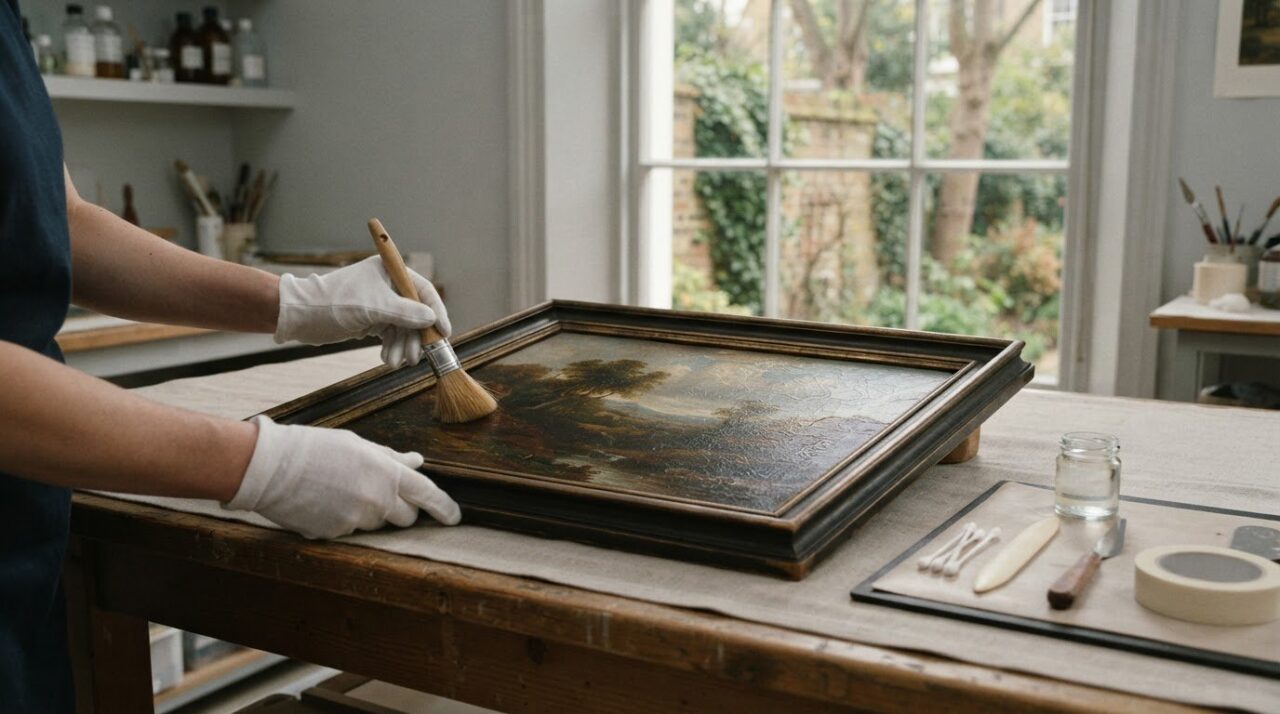
Only consider dusting if the surface appears stable and intact, and a paintings conservator has advised that it’s appropriate. If you’ve been given that guidance, use a clean, very soft brush with a light touch and no pressure. Don’t use a duster, cloth or cotton bud on the painted surface.
Stop straight away if the brush catches, paint moves or you notice loose flakes. Don’t try again to see whether it happens a second time. Leave the painting alone and ask a conservator for advice. If you’re unsure about the surface, it’s safer not to dust it.
Why varnish removal and home remedies are risky
To the untrained eye, dirt, varnish and paint can be difficult to tell apart. A discoloured layer might be varnish, but deciding what to remove and how requires an assessment of the particular painting. Solvents and other cleaning agents can affect not only the material they touch, but also the layers beneath. Even water can cause harm, so don’t try to spot-clean a mark.
When caring for oil paintings on canvas, patience is often the safest choice. Leave ingrained dirt, yellowed varnish and suspected mould for a qualified paintings conservator to assess. Don’t use sprays, polish, homemade mixtures or advice from an online recipe on an original painting. A professional can examine the surface and explain suitable next steps without relying on guesswork.

Protect an oil painting with thoughtful hanging, framing and storage
A secure hanging position and careful framing can reduce everyday risks while allowing the painting to sit comfortably in your room. These choices support presentation and protection, but they can’t repair existing damage or replace an assessment by a paintings conservator. For caring for oil paintings on canvas, consider both where the work hangs and how it will be protected if it needs to be moved or stored.
Hang artwork securely and away from hazards
Use fixings suited to the painting’s weight and the type of wall. If you’re unsure what the wall can support or how the hanging should be secured, ask a suitable professional for help rather than guessing. Once hung, avoid pulling or twisting the frame to check it. Look periodically to see whether it still sits securely and appears level.
Use this short checklist when choosing a position:
- Choose a secure wall. Make sure the hanging arrangement is appropriate for the work and wall type.
- Keep clear of hazards. Avoid direct sunlight, heating appliances, water sources and places where people or doors may knock the frame.
- Consider the surroundings. Check for signs of damp or condensation, and choose a spot where the painting is less likely to be bumped during everyday activity.
A frame can help present a painting and may offer some protection, depending on its design and condition. It isn’t a guarantee against environmental damage, and it won’t make an unstable or damaged surface safe. If you’re considering a frame, explore creative framing services and discuss presentation choices. For conservation concerns, consult a qualified paintings conservator.
Store or transport a painting with care
If a painting needs to be stored temporarily, keep it upright, stable and protected from knocks. Make sure the painted surface can’t rub against another object or be pressed by packing. Choose a clean, dry place away from heat, damp, dust and conditions that change quickly. Avoid leaving a painting where it could be tipped or have items placed against it.
For transport, plan how the painting will be supported before lifting it, and keep the surface protected from contact throughout the journey. Valuable, fragile, oversized or damaged works need extra care. Ask a paintings conservator for advice on suitable packing and handling before moving them. If the work appears unstable, don’t attempt to pack or transport it yourself without guidance.
Know when an oil painting needs a paintings conservator
Some changes call for more than careful home care. If you notice damage or a sudden change in your painting, pause rather than trying to clean, repair or investigate it yourself. Knowing when to seek help is an important part of caring for oil paintings on canvas.
Warning signs that should not be treated at home
Arrange a professional assessment if you see paint flaking, lifting or missing, cracks that appear to be growing, water stains, mould or a canvas that has become loose or distorted. These signs can have different causes, and their appearance alone may not show how serious the problem is.
A photograph can help you record what you’ve noticed, but it can’t diagnose the cause. Take a clear image without touching the affected area, and note when you first saw the change and whether it seems to be spreading. If the painting appears unstable, don’t clean or move it. Keep it undisturbed while arranging advice from a paintings conservator.
Choosing a suitable conservation professional
Look for a conservator with experience specifically in easel paintings, which include paintings on canvas. The Institute of Conservation (ICON) can be a useful UK starting point for finding conservation professionals. Check its current directory details when seeking someone suitable.
Before agreeing to any work, ask the conservator about their relevant experience and what their examination will involve. Ask what treatment they propose, why it’s appropriate for this painting, and whether they’ll provide written documentation of the assessment and any work carried out. A clear explanation should help you understand the options and make an informed decision.
To prepare for an initial conversation, gather the painting’s known history, any existing photographs and a brief description of the changes you’ve observed. You don’t need to identify the cause yourself. Share what you’ve noticed and ask what the next step should be.
With the right guidance, you can make a considered plan for the painting’s care. If you’re also looking for artwork to enjoy at home, take a look at Brian Crosby Art’s original paintings.
Give your painting thoughtful care for years to come
Caring for oil paintings on canvas is mostly about steady, sensible choices: display the work away from hazards, handle it carefully and avoid cleaning methods that could damage its surface. Keep an eye out for flaking, mould, stains or a loose canvas, and ask a qualified paintings conservator for advice if something concerns you.
You don’t need an elaborate routine. A calm, observant approach can help you enjoy your painting while reducing avoidable risks. When professional assessment is needed, leaving the work untouched is often the wisest next step.
Brian Crosby Art offers original paintings, limited edition prints and commissions, including architectural illustrations and portraits. Brian Crosby is a recognised member of the Society of Architectural Illustrators. Explore Brian Crosby Art’s paintings and commissioned artwork to find a piece for your home or discuss a bespoke work.
Frequently Asked Questions
How often should you dust an oil painting on canvas?
There’s no single dusting schedule that suits every painting. Caring for oil paintings on canvas means checking the surface first and dusting only if it’s stable, intact and suitable for light dusting. If a conservator has advised that it’s safe, use a clean, very soft brush lightly, without pressure. Don’t dust if paint is flaking or lifting, and stop immediately if anything catches or moves.
Can you clean an oil painting with water?
No. Don’t use water on an oil painting, even for a small mark or patch of dust. Moisture can affect paint, varnish or canvas, and rubbing may disturb the surface. Avoid household cleaners, solvents, polish, sprays and online cleaning recipes as well. If the painting has ingrained dirt, a stain or a cloudy-looking surface, leave it alone and ask a paintings conservator to assess it.
Can sunlight damage an oil painting?
Yes. Direct sunlight can expose a painting to strong light and heat, which may contribute to deterioration over time. Hang it where sunlight won’t fall directly on the surface, and consider how the light moves across the room during the day and through the seasons. Also avoid placing it beside radiators or fireplaces. If you’re concerned about existing changes in colour or condition, ask a paintings conservator for advice.
What should you do if paint is flaking from a canvas?
Stop handling, cleaning or moving the painting, and contact a qualified paintings conservator for an assessment. Don’t press flakes down, brush them away, apply adhesive or attempt a repair. Take a photograph from a safe distance to record what you’ve noticed, but remember it can’t reveal the cause or diagnose the condition. Keep the painting undisturbed and describe any recent changes when you speak with the conservator.
How should you store an oil painting on canvas?
Store the painting upright and secure in a clean, dry place with a steady environment. Keep the painted surface from touching other objects, and protect it from knocks, dust, damp and heat. Don’t lean items against it or leave it somewhere it could fall. For a valuable, fragile, large or damaged painting, ask a paintings conservator how to protect and pack it before storage or transport.
Does an oil painting need to be varnished?
Not necessarily. Whether varnish is suitable depends on the painting, its materials, condition and intended appearance. Varnish can change how colours and surface sheen look, and applying or removing it incorrectly may damage the artwork. Don’t varnish an existing painting as a home-care step. If you’re unsure whether a painting has varnish, or think its surface has changed, ask a paintings conservator to assess it.
How do you find a qualified oil-painting conservator in the UK?
Look for a conservator with specific experience in easel paintings, including oil paintings on canvas. The Institute of Conservation (ICON) can be a useful starting point. Check its current directory details and confirm the conservator’s relevant experience. Ask what their examination involves, what treatment they recommend and why, and whether they provide written documentation. You can also request references or examples of comparable work before deciding how to proceed.