


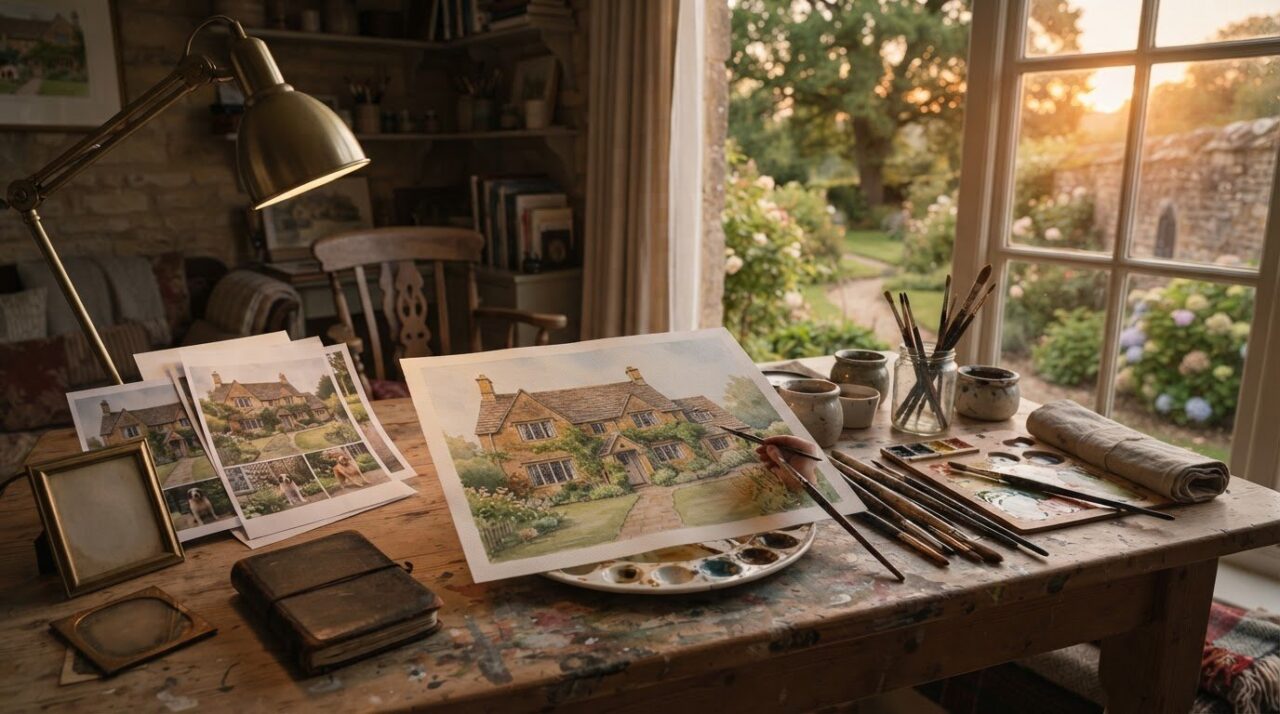
What if a house portrait could hold more than the shape of a roof or the pattern of its windows? If you’re asking, “How do I commission a painting of my house that feels like home?”, start with the details a photograph might miss: familiar light, a favourite view or the memories tied to a particular corner.
It’s natural to want the finished painting to look like your home and feel like it, too. You don’t need to have every choice settled. A few clear photographs, the features you’d like included and a sense of the atmosphere you hope to capture give an architectural artist a useful starting point.
This guide explains how to prepare a personal commission brief, choose reference images and decide which details matter most. You’ll also find practical ways to think about the artwork’s setting and style. Brian Crosby’s specialist architectural experience, as a recognised member of the Society of Architectural Illustrators, provides a considered foundation for a personal house commission. A home portrait can become a lasting reminder of the place and stories that make your house yours.
Key Takeaways
- A house portrait can preserve the atmosphere and associations of a home, not just record its façade.
- Gather clear reference photographs and note the features, views and memories you’d most like the artwork to reflect.
- Consider whether a close architectural view or a wider composition with the garden and surroundings best suits your story.
- Before you commission a painting of my house, clarify its purpose and the qualities you want the finished piece to preserve.
- Brian Crosby’s architectural experience and Society of Architectural Illustrators membership provide a considered foundation for a personal house commission.
Why commission a painting of your house instead of keeping another photograph?
A house painting commission is a one-off artwork created around a particular home, with attention to the building’s distinctive features and the feeling of the place. A photograph records what was in front of the camera. A painting can also bring out the quality of the light, the relationship between the house and its setting, or the details that make the building familiar to the people who live there.
That doesn’t make photographs any less valuable. They capture precise details and everyday moments. A painted portrait offers a different way of seeing: the artist can emphasise a welcoming doorway, the shape of a roofline or soft light falling across a garden. The result can be both recognisable and personal, rather than simply a record of every visible feature. Architectural painting has a long place in art, giving buildings and their surroundings space to become subjects in their own right.
A house portrait can preserve not only how a home looked, but also the sense of place and belonging it held.
What makes a painted house portrait personal?
The most meaningful detail isn’t always the grandest architectural feature. It might be the kitchen window where you watched the seasons change, a garden gate worn smooth by years of use or the view you saw each morning. These familiar details carry meaning because of the life lived around them. As you plan a commission, ask yourself: what would I most like to remember about this home? Your answer can help identify what deserves attention in the artwork.
Is a house painting right for a home, a move or a gift?
A portrait of a home can mark many kinds of change. Long-time residents might choose one as a keepsake of a place filled with family memories, while someone who has recently moved may want to celebrate a new chapter. It can also be a thoughtful gift for a housewarming, retirement or anniversary, especially when the home holds a story shared by the people receiving it.
If you’re weighing up what to consider before starting a commission, explore the commissioned house portraits buyer’s guide. You don’t need to know every artistic detail before you begin. Start with what makes the home meaningful to you.
What should I share when commissioning a painting of my house?
A useful starting point is a small collection of clear photographs and a few notes about what makes the home yours. You don’t need specialist art vocabulary or a polished brief. If you’d like to commission a painting of your house, gather information that helps the artist understand both the building and your connection to it.
Before describing your project, note:
- Which view or part of the house you’d most like to show.
- Distinctive features, such as a chimney, bay window, porch or mature tree.
- The season, light or atmosphere you have in mind.
- Any personal story or detail you’d like the artwork to preserve.
These notes can simply be prompts. They give the conversation a starting point while leaving room for the artist’s interpretation. The long history of artists depicting built spaces is explored in Painter-Architects and Built Spaces, a reminder that architecture can be more than a backdrop.
Which photographs make useful references for a house painting?
Choose clear images that show the building’s overall shape, its entrance and any features you’d like the artist to notice. A straight-on view can show the façade; an additional angle may reveal the depth of a porch, the line of a roof or how the house sits beside a garden wall. If one photograph leaves a feature unclear, include another rather than expecting a single image to show everything.
Older photographs can also help explain a change or carry personal meaning. Share them as context and describe what you value in them.
How do I explain what makes my house special?
Write a few sentences in everyday language. You might mention the feeling of arriving home on a rainy evening, the way afternoon light reaches a particular window or a tree that has grown alongside the house. Then identify what you’d most like to recognise in the finished artwork. You don’t need to name a style or use technical terms. Words such as “quiet”, “welcoming” or “full of summer light” can communicate the atmosphere you hope to preserve.
Photographs show the artist what the home looks like; your notes explain why it matters to you. Together, they provide visual reference and personal context. To see how these details can inform a bespoke architectural commission, visit Brian Crosby Art’s house commission service.
How do style, composition and setting shape a house painting?
A house commission isn’t simply a matter of copying every visible feature. The artist interprets the building and its surroundings, deciding how proportion, detail, light and atmosphere work together. A close view can draw attention to the shape of a doorway or roofline; a wider composition can show how the house sits within a garden or landscape.
Neither approach is automatically better. The right balance depends on what you want the artwork to say about the place. Season and light can also shape its mood: a bright, open view feels different from a quieter scene under soft, overcast light. These are choices to discuss, not effects to assume. Describing the feeling you hope to preserve can help guide the composition.
Should the painting focus on the house or its surroundings?
A building-led composition gives the architecture more space, making its shape and features the main focus. A broader view can include a garden, path, trees or landscape, adding context when those surroundings are part of what makes the home meaningful. In your commission brief, say which matters most: seeing the house clearly, remembering its setting or finding a balance between the two.
| Composition approach | May suit you if… |
|---|---|
| Closer architectural view | You want the building’s form and distinctive features to take centre stage. |
| Wider view with surroundings | The garden, approach or landscape is part of how you remember the home. |
| Balanced composition | You’d like the house to remain clear whilst still showing its relationship with the setting. |
How can an artist capture a home’s character?
Character often comes from the relationships between features: the building’s proportions, the way a window sits within the façade, a path leading towards the entrance or light falling across a wall. An architectural illustrator considers these elements together rather than treating each detail in isolation. This can help a painting feel recognisable without becoming a mechanical copy. For more on this specialist perspective, read the professional house illustrator guide.
When preparing your brief, describe what should draw the eye first and what can remain quieter in the composition. A simple instruction such as “keep the house prominent, but include the garden” communicates your priorities without requiring technical terms.

How to prepare for commissioning a painting of your house
A little preparation makes it easier to explain what you hope the finished artwork will preserve. You don’t need to settle every artistic choice in advance. Begin with why you want the painting, what you’d like it to show and which details matter most.
What decisions should I make before starting?
Use this checklist to organise your thoughts before describing your project:
- Clarify the purpose. Is the artwork for your own enjoyment, to mark a milestone or to give as a present?
- Choose a main view. Decide which angle best represents the home, and whether an architectural feature or part of its setting should stand out.
- Pick out what you want to preserve. Note the qualities that feel most like home, such as a welcoming entrance, a distinctive roofline or the calm of the garden.
- Gather references. Bring together photographs that show the building clearly, along with older images that help explain its story.
- Write a few personal notes. A short account of what the home means to you gives your practical choices useful context.
This doesn’t need to read like a formal art brief. A few clear priorities can communicate what you value, even if you’re not yet sure where to begin.
What affects the scope of a house painting commission?
Commission fees are tailored to the project’s complexity, size and medium. The elements included in the composition and the scale you have in mind help define the work. A detailed brief won’t make every decision for you, but it can make your preferences easier to understand and discuss.
Separate your essential priorities from details you’re open to exploring. You might want the front elevation to remain the main focus, whilst feeling flexible about how much of the surrounding garden appears. That distinction makes clear what matters most without requiring technical language.
For broader guidance as you prepare, read the house portrait commission guide. Once you’ve gathered your ideas, explore a house painting commission with Brian Crosby Art and take the next step towards a personal architectural artwork.
Commission your house painting with Brian Crosby Art
A house commission brings together two kinds of understanding: the visible character of a building and the personal meaning it holds for you. Brian Crosby’s architectural illustration experience offers a considered way to approach both. You can begin with photographs and everyday language; there’s no need to arrive with a polished brief or know the technical terms for every feature.
Why work with an architectural illustrator on a house portrait?
Architectural experience matters because a home’s character depends on more than its individual details. Proportion, structure and the relationships between features all contribute to how a building is recognised. A distinctive entrance, for instance, sits within the shape of the façade, and its effect changes with the surrounding space and light.
Brian Crosby is a recognised member of the Society of Architectural Illustrators. This specialist background is a relevant foundation for a commission centred on your home. Your photographs and notes can explain what you’d like the artwork to preserve, whether that’s the building’s familiar outline, a particular view or the atmosphere associated with it.
What is the next step towards a commissioned house painting?
Gather the view you’re drawn to, photographs that show it clearly and a few notes about what matters most. You might want to keep the house prominent, include more of its surroundings or preserve a particular feeling. There’s no need to describe this in artistic language. A simple account of what you love and what you hope to see is a helpful place to begin.
As you picture the finished artwork in your home, consider how its presentation might complement the room and the painting. The frame and surrounding space can help the piece sit comfortably alongside your other treasured objects.
If you’re ready to take the next step, explore a house painting commission with Brian Crosby Art. Bring your chosen view, photographs and personal priorities to start planning an artwork that reflects the character of your home.
Take the first step towards a house portrait
A house portrait can bring together the details that make a building recognisable and the memories that make it yours. A few clear photographs, a preferred view and notes about the atmosphere or features you value are a helpful place to begin. You don’t need specialist language to explain what you hope the artwork will preserve.
If you’ve been wondering how to commission a painting of your house, Brian Crosby Art creates commissioned architectural illustrations with your home’s character at the heart of the work. Brian is a recognised member of the Society of Architectural Illustrators, bringing relevant architectural experience to each commission.
Start with what matters most to you: the shape of the house, its setting or the feeling you associate with being there. Those first thoughts can grow into a considered commission, one step at a time.
Explore a house painting commission with Brian Crosby Art and take a first step towards preserving the character of your home in a personal artwork.
Frequently Asked Questions
Can I commission a painting of my house from a photograph?
Yes. Photographs provide useful visual references for a house commission. Share clear images showing the building, and include extra angles if a feature is obscured in one view. Notes about distinctive details, such as the roofline or entrance, help direct attention. Add personal context too: explain why the home matters or what you hope the painting will bring to mind. Photographs offer visual information, while your notes explain what matters beyond the façade.
What should I send an artist for a house painting commission?
Send clear photographs of the building, with additional views if they show details that aren’t visible in your main image. Add a short description of the home’s character and identify the features, setting or atmosphere you value most. Perhaps you’d like the artwork to reflect the building’s proportions, its garden or a particular quality of light. The aim is to provide both a visual reference and a sense of why the property is meaningful to you.
How much does it cost to commission a painting of my house?
The commission fee is tailored to the project, including its complexity, size and medium. The scope depends on what you have in mind. A clear brief can help define it by setting out your preferred view, the details you’d like included and the scale you’re considering. This gives the project a specific starting point without requiring you to make every artistic decision in advance.
How long does a house painting commission take?
If the painting is connected to a move, anniversary or other occasion, include the date when you describe your project. This helps put the commission’s scope and timing into context. Gathering references and clarifying what you hope to preserve also gives the project a clearer starting point.
Can I choose which part of my house appears in the painting?
You can identify a preferred view, architectural detail or surrounding feature in your brief. For example, you might want to highlight the entrance or show more of the garden. Photographs from different angles can help explain what you have in mind, particularly if one view doesn’t show the details clearly. The final composition is an artistic decision shaped by the project, so describe your priorities without assuming an exact result or a particular revision process.
What makes a house portrait different from a photograph?
A photograph records a particular view, while a painting can interpret a home’s character through composition, atmosphere and selected details. Neither is inherently better; they offer different ways to remember a place. A house commission can bring personal meaning into the artwork when you share what you value, whether that’s the building’s distinctive form, its setting or the feeling you associate with being there. Your photographs provide visual reference, and your story explains why those details matter.
Is a commissioned house painting a thoughtful housewarming or anniversary gift?
Yes, a painting of a meaningful home can mark a move, shared history or special occasion. Before commissioning one as a gift, gather photographs and a few details about why the property matters to the recipient. It might be a first home, a long-loved family house or a place connected with an important chapter. Consider the recipient’s connection to the home as you plan, and allow time for the commission rather than assuming a particular completion date or gift packaging.