


What makes a house portrait feel like your home, rather than simply a picture of its façade? Often, it’s the details only you would think to mention: the climbing plant by the doorway, the changing light on the windows, or the path where everyone arrives. These personal touches give watercolor house portraits warmth and meaning, while a clear reference photo helps an artist understand the building’s character.
It’s natural to wonder whether your photograph shows enough detail or whether the finished artwork will look like the house. You don’t need to have every answer before making an enquiry. A little preparation and an open conversation can help you explain what matters most, from your preferred view to the features you’d like included.
This guide explores what makes a watercolour house portrait distinctive, how to choose useful reference photographs and what to ask before agreeing a commission. Brian Crosby Art offers bespoke architectural commissions, and Brian is a recognised member of the Society of Architectural Illustrators. Watercolour availability isn’t confirmed, so ask whether it’s an option for your commission and what decisions you’ll need to make.
Key Takeaways
- Shape, light, colour and surrounding details can give a house portrait atmosphere and personal meaning.
- Choose a clear reference photo that shows the home’s key features. Add close-ups when important details are difficult to see.
- For watercolor house portraits, explain which features need to remain recognisable and which the artist may simplify.
- Before commissioning, ask about the available medium, process, approval points, delivery arrangements and revision policy.
- Gather photographs and notes before making an enquiry. Personal details give an architectural commission a more considered starting point.
What makes watercolour house portraits feel personal and distinctive?
A watercolour house portrait is an artist’s interpretation of a home, often created from photographs and details supplied by its owner. It can show the building clearly while also suggesting how the place feels: the warmth of late-afternoon light, the shade beneath a tree or the colour of a much-loved front door. Transparent washes and softened edges can lend watercolour a gentle, atmospheric quality, though each artist’s materials and approach will differ.
As a form of architectural illustration, a house portrait can be made by hand or using other methods. The medium and treatment help shape the final effect. A bespoke artwork starts with a particular home and the priorities shared by its owner, making it different from a generic image while leaving room for the artist’s interpretation. If you’re considering watercolor house portraits, check which medium and commission options the artist actually offers.
What can a watercolour portrait show beyond the building?
A doorway might recall the first time you came home; familiar planting could bring to mind the season you most associate with the house. Even the direction of light can make a portrait feel calm, bright or nostalgic. Such details help tell the story of a home, rather than simply identify its structure.
An artist may simplify small or distracting features to keep the composition clear. Before commissioning, consider which details make the property feel like home. Is it the distinctive roofline, a particular window, a garden gate or a climbing plant around the entrance? Sharing those priorities gives the artist a more personal starting point.
Is a watercolour house portrait meant to be an exact record?
A portrait can be recognisable without reproducing every detail exactly. The artist balances architectural features, such as the shape of the windows and roof, with choices about colour, light and composition. The result may be a close likeness or a more expressive impression, depending on the references, agreed priorities and the artist’s approach.
Be clear about what matters most to you. If the front door’s colour or an unusual chimney is essential, say so. If atmosphere matters more than minor features, explain that too. Discussing accuracy, mood and details before commissioning helps you understand how the artist may interpret the home. Brian Crosby Art offers bespoke architectural commissions, and Brian is a recognised member of the Society of Architectural Illustrators. Ask whether watercolour is available for your requested commission.
How an artist can turn house photographs into a watercolour portrait
A photograph gives an artist a starting point, not a set of instructions to copy mechanically. A commission might begin with reviewing the references, choosing a main viewpoint and deciding which details deserve emphasis. The artist may then plan the composition, establish the building’s outlines and add colour in stages. Every artist’s process differs, so this is an example of what may happen, not a guaranteed sequence.
From reference image to a considered composition
The main photograph usually establishes the view and the home’s overall proportions. Additional images can clarify features that are hidden, small or in shadow, such as a doorway, roofline or window detail. Perspective matters too: an angled view can show the building’s depth, while a straight-on view may emphasise its symmetry.
Before painting begins, ask how the chosen composition will treat essential features and whether any adjustments are proposed. Moving a tree, changing the crop or leaving out a parked car can alter the image’s balance. Discussing these possibilities early helps align the artwork with your priorities. Don’t assume that every artist offers the same approval stages.
Reference photographs guide an artist’s interpretation of a home; they don’t dictate every mark in the finished portrait. Keep this in mind when choosing images and deciding how closely you want the final composition to follow them.
What makes watercolour’s marks and layers distinctive?
Watercolour can be built with transparent washes, placing one layer of colour over another so earlier marks may still show through. An artist might leave areas of paper visible for brightness or soften edges to suggest daylight or atmosphere. These are possibilities, not rules. The result depends on the artist’s choices and materials.
MoMA’s description of architectural drawing includes watercolour over a structure drawn in pencil. It’s an example of how a defined architectural outline can sit alongside colour. In a house portrait, this balance can keep the building recognisable while washes suggest light, shade and surrounding greenery. Watercolour house portraits can feel expressive without losing the features that identify a particular home.
If you’re considering a bespoke architectural commission, look at the artist’s available work and ask whether watercolour is an option for your requested piece. You can explore Brian Crosby Art’s architectural commissions and confirm the medium and process directly.
Choosing reference photos that help your watercolour house portrait
A useful reference doesn’t need to look professionally staged. It needs to show enough of the home for an artist to understand its structure, viewpoint and distinctive features. Look at the photograph as if you were describing the house to someone who’s never seen it. Can they make out the roofline, windows and entrance? Is an important feature hidden by shadow, glare or an obstruction?
Which angle and lighting work best for a house portrait?
Choose a view that shows the features you most want recognised. A straight-on photograph may suit a symmetrical façade, while an angled view can reveal the depth of a porch or the shape of a side wall. There’s no single best angle for every property. Where possible, choose even, natural light and avoid strong shadows or bright reflections that obscure details. This watercolor tutorial for architectural details shows how clear shapes and surface detail can support an architectural painting.
Use this checklist when reviewing your main photograph:
- Clear view: The house is in focus, with enough of the building in frame.
- Visible features: The roofline, windows and entrance can be seen.
- Helpful light: Glare and deep shadow don’t hide important details.
- Obstructions noted: Identify cars, bins, scaffolding or overgrown branches if they’re temporary or you’d prefer them left out.
If an obstruction hides a feature that matters, ask whether another viewpoint would help. Don’t assume every sign of everyday life should be removed. A familiar detail may be part of the home’s character.
What should you send besides the main photograph?
Additional photographs help when a feature isn’t clear in the main view. A close-up might clarify the shape of a doorway, a decorative roof detail or a garden feature beside the house. Keep the main photograph as your preferred composition, then label each supplementary image with the detail it shows. This helps avoid confusion if photographs show changes or conflicting details.
Add a short note identifying the features you consider essential, any preferred season or lighting, and anything you’d like omitted. For watercolor house portraits, a clear, well-lit main photograph is a useful foundation. Supporting images and a short explanation of your priorities can fill in the details.
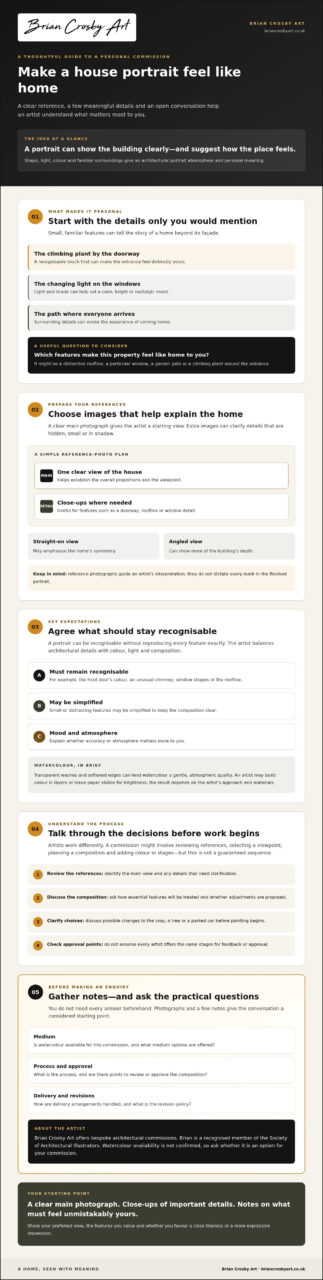
Setting expectations for watercolour house portrait likeness and details
A recognisable portrait starts with clear references and shared priorities. Even a detailed photograph can’t tell an artist which features matter most to you, or whether you prefer a faithful record, a particular atmosphere or a balance of both. Discussing those preferences before work begins helps the artist understand what to emphasise. It doesn’t guarantee an exact copy: the finished image also reflects the artist’s interpretation and chosen approach.
How can you help an artist capture what matters most?
Choose three or four details that make the property distinctive or meaningful to you. These might be its roof shape, an unusual window, a coloured front door or a tree you associate with the garden. Share photographs that show those features clearly and explain why each matters. For example, you could say that the front door is essential for recognition, while the tree helps convey the feeling of the place.
If a detail isn’t clear in the photographs, ask how the artist would handle it. They may need another reference or your description, or they may suggest simplifying it in the composition. Separate must-keep features from details you’re happy for the artist to interpret, simplify or leave out. This gives the conversation a useful focus without trying to direct every brushstroke.
What should you clarify before work begins?
Agree the practical basics before committing. Ask which mediums and sizes are available, what composition options can be considered and how the artist will confirm key details. If you’re exploring watercolor house portraits, check specifically whether watercolour is available for that commission rather than assuming it is.
Ask how progress is shared, whether there are approval points and when changes can be requested. Processes and revision terms vary, so don’t assume a sketch, preview or particular number of changes is included. Clarify delivery, presentation and timing directly as well. These details may affect your plans, especially if the portrait is intended as a gift.
To discuss your priorities and confirm whether watercolour is available, enquire about an architectural commission.
How to enquire about a bespoke watercolour house portrait
A thoughtful first enquiry doesn’t need to be complicated. Gather a clear photograph of the property, note what the artwork is for and identify the features you’d most like it to show. Ask about the medium and practical arrangements before deciding whether to proceed. This gives the artist useful context and helps you understand what’s possible without assuming every commission follows the same process.
What information should your first enquiry include?
Share your main reference photograph and any supplementary images, explaining what each one shows. A short note can cover the portrait’s purpose, your preferred view and whether architectural accuracy, atmosphere or personal details matter most. For instance, you might want the building’s proportions to be clear while keeping a favourite garden feature in view.
Ask which mediums and formats are available, how the artist approaches composition, what the process involves and how delivery is arranged. If you’re comparing watercolor house portraits, remember that artists’ approaches and commission terms vary. The commissioned house portraits buyer’s guide offers further help with the wider commissioning process.
How can Brian Crosby Art help with an architectural commission?
Experience in architectural illustration is relevant to depicting a home’s structure, proportions and distinctive details. Brian Crosby is a recognised member of the Society of Architectural Illustrators, and Brian Crosby Art offers bespoke architectural commissions. Watercolour availability for these commissions isn’t confirmed, so ask which medium is available rather than assuming it can be requested.
For more on how an illustrator interprets a building, read about the role of a professional house illustrator. You can also ask about the commission’s size and format, stages, approval points, changes, timing and delivery. Confirming these details directly helps you make an informed choice.
If you have photographs ready, discuss an architectural commission with Brian Crosby Art and ask whether watercolour is available for your requested artwork. You don’t need to have every detail settled first. Sharing what you hope to capture is a helpful place to begin.
Take the next step towards a personal house portrait
A meaningful portrait begins with more than a clear view of the building. Choose photographs that show its recognisable features, then tell the artist which details matter most and whether you value architectural accuracy, atmosphere or personal touches. This gives your enquiry a clear starting point and helps you discuss what the finished artwork might include.
Watercolor house portraits can offer a distinctive, personal interpretation of a home, but each artist’s medium and process is different. Ask whether watercolour is available for your requested commission, and clarify the format, process and practical terms before deciding.
When you’re ready, discuss your architectural commission with Brian Crosby Art. Begin with the photographs and thoughts you already have, then explore the possibilities through a considered conversation.
Frequently Asked Questions
Can you commission a watercolour portrait of a house from a photograph?
Yes, you can commission watercolor house portraits from artists who accept house commissions in that medium, using a photograph as the starting reference. Send a clear view and explain which features you’d like retained. Artists differ in their materials, composition and process, so ask whether watercolour is available, what information they need and which practical terms apply before agreeing. A photograph guides the artist’s interpretation; it doesn’t automatically require an exact copy.
What makes a good photo for a watercolour house portrait?
A good reference photo shows the house in focus, with its main architectural features visible and little glare or heavy shadow hiding details. Choose an angle that makes the home recognisable and includes the features you most want depicted. If the doorway or roofline is difficult to see, send a separate close-up and explain what it clarifies. Note temporary obstructions, such as a parked car, and ask whether another viewpoint would help.
How does an artist create a watercolour house portrait?
An artist may review your photographs, choose a main viewpoint and plan how the building will sit within the composition. They might establish its outlines before adding colour in layers or washes, though methods vary. The references guide choices about proportions, details and atmosphere; they don’t dictate every mark. Ask the artist to describe their process, including how they’ll handle features that aren’t clear in the photographs.
Will a watercolour house portrait look exactly like my home?
Not necessarily. A portrait can be recognisable without reproducing every detail exactly, since the artist interprets the references through choices about composition, colour and atmosphere. Clear photographs and an agreed list of priorities help the artist understand what matters most. Identify essential features, such as an unusual roofline or front entrance, and ask how they’ll be represented. Discuss your expectations and any approval points before work begins.
What details should I give an artist for a house portrait?
Share the main photograph, useful close-ups and a short note about your priorities. Choose three or four defining features, such as a particular window, doorway, roof shape or garden detail, and explain why they matter. Mention your preferred viewpoint or atmosphere, plus anything you’d like left out. If a feature isn’t clearly shown, say so and ask whether another reference or a written description would help.
Can an artist include a garden or other details in a watercolour house portrait?
Possibly, but what can be included depends on the artist and the agreed commission. A familiar tree, climbing plant or garden path can add context and personal meaning, while too many details may compete with the house. Tell the artist which surrounding features matter and provide clear references. Ask what can be included, what may be simplified and whether requested additions affect the commission terms.
Does Brian Crosby Art offer watercolour house portrait commissions?
Brian Crosby Art offers bespoke architectural commissions, but it isn’t confirmed whether watercolour is available for house portraits. Brian Crosby is a recognised member of the Society of Architectural Illustrators, a relevant professional background for depicting buildings. If you’re interested in a watercolour commission, ask the studio directly about the available medium, format and process. Confirm the practical terms before deciding whether the commission is right for you.