


What if commissioning a bespoke painting wasn’t an intimidating test of art-world etiquette, but one of the most rewarding creative conversations you’ll ever have? Many art lovers hesitate to take the leap, assuming working with an artist on a commission demands technical drawing terminology, flawless reference photographs, or rigid aesthetic rules. In reality, the most moving pieces begin simply with an atmospheric memory, a personal story, and an open, supportive dialogue between client and painter.
It’s entirely normal to feel uncertain about how much creative input you should offer, or to worry whether the finished canvas will truly capture the character of a cherished home, landscape, or portrait. This guide shows you how to experience a seamless commission, from shaping your initial thoughts into an effective brief to hanging a bespoke painting on your wall. Ahead, we break down the stage-by-stage studio process, clarify key milestones, and show you how to collaborate with quiet confidence from the very first sketch.
Key Takeaways
- Understand how bespoke artwork differs from off-the-wall gallery purchases, transforming a personal memory into a rewarding creative partnership.
- Learn how to shape a clear brief that communicates mood, scale, and colour palette, without needing technical drawing terminology or professional photographs.
- Discover the reassuring studio stages of working with an artist on a commission, following predictable milestones from preliminary sketches to final paint layers.
- Avoid misunderstandings with transparent written agreements that establish clear revision rounds, standard deposit schedules, and physical ownership terms.
- Navigate final visual sign-off with confidence, exploring how bespoke framing ensures your finished piece arrives ready to be safely displayed and cherished.
Demystifying the Art Commission: What It Means to Commission Custom Artwork
At its heart, an art commission is simply a creative partnership. While buying off-the-wall gallery art means selecting an existing piece, working with an artist on a commission allows you to shape a concept from the very beginning. You step into a supportive conversation, watching an initial spark develop into a unique piece of fine art.
There’s a persistent myth that commissioning original fine art is reserved solely for seasoned collectors or gallery insiders. In reality, it’s an accessible, deeply personal journey open to anyone who wants to preserve a memory. Bespoke pieces carry an emotional resonance that ready-made work simply can’t replicate. Whether it’s capturing the quiet character of a family home or immortalising a loved one in paint, the process turns personal stories into heirloom pieces that endure for generations.
Why Choose a Custom Commission Over Ready-Made Art?
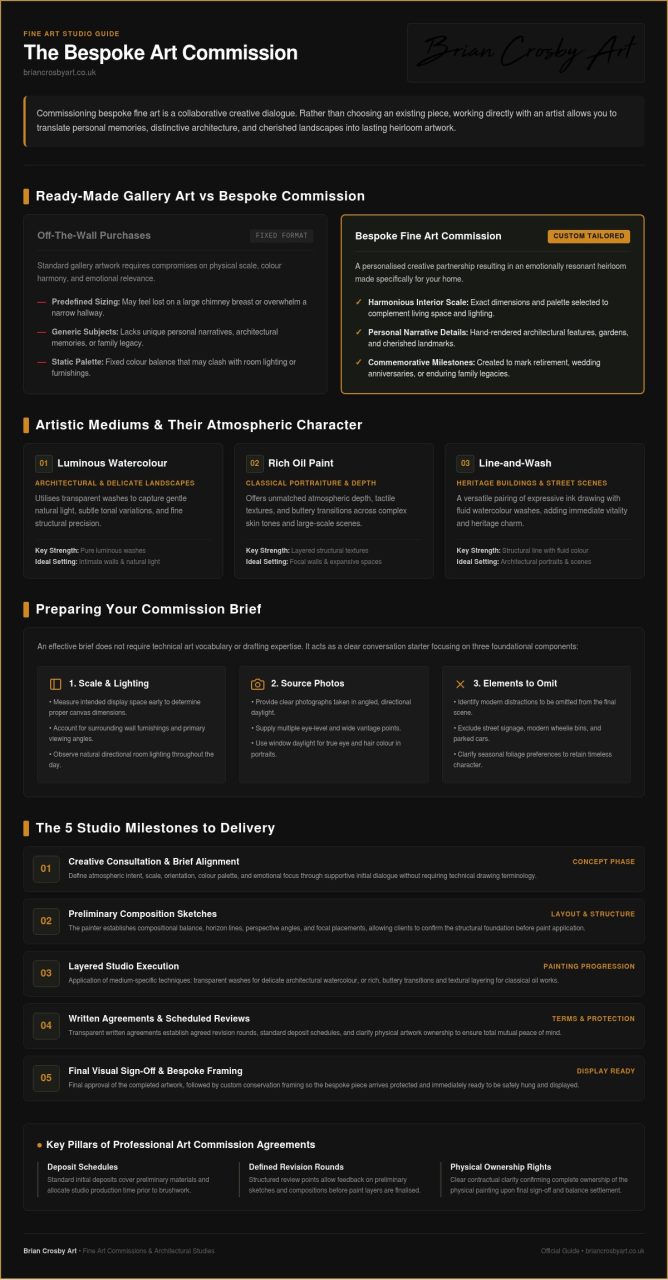
Ready-made artwork often requires compromise, whether in size, colour balance, or emotional connection. Choosing custom artwork gives you complete control over how the finished piece lives in your home:
- Harmonious interior scale: Tailor exact dimensions and palettes to complement your living space and natural room lighting seamlessly.
- Commemorative milestones: Mark landmark occasions, such as retirement, wedding anniversaries, or family legacies, with lasting significance.
- Personal narrative details: Weave meaningful elements into the scene, such as specific architectural features, beloved gardens, or nostalgic backdrops that off-the-shelf prints lack.
Common Mediums for Bespoke Works: Watercolour, Oil, and Ink
Selecting the right medium sets the tone, atmosphere, and visual character of your artwork:
- Luminous watercolours: Superb for architectural commissions and delicate landscapes, using transparent washes to capture gentle light and fine structural precision.
- Rich oil paints: The classical choice for portrait commissions, lending unmatched depth, rich textures, and buttery transitions across skin tones.
- Line-and-wash techniques: A versatile pairing of expressive ink drawing and fluid watercolour washes, adding immediate vitality and charm to heritage buildings and street scenes.
Gaining a clear sense of these artistic qualities ensures that working with an artist on a commission feels welcoming and straightforward from your very first conversation.
Preparing Your Commission Brief: Vision, Reference Material, and Sizing
A good commission brief doesn’t require artistic jargon or technical drawing plans. Instead, think of it as a creative conversation starter. The brief simply needs to articulate your emotional intent, preferred atmosphere, and practical space requirements while leaving room for the painter’s expertise to flourish.
Begin with the wall where the painting will eventually hang. Consider the room’s natural light, viewing angles, and surrounding furnishings. A small, intimate watercolour on paper might feel lost on a large chimney breast, whilst an expansive oil canvas could easily overwhelm a narrow hallway. Measuring the intended space early helps establish clear dimensions before preliminary sketches begin.
Selecting and Taking the Best Reference Photographs
Reference photographs are the visual foundation of your project. Supplying strong source material ensures your painter understands the true character of the subject without guesswork:
- Embrace directional daylight: Photograph buildings or landscapes on clear days when angled sunlight casts natural shadows. Strong contrast reveals structural textures and depth far better than flat, overcast light.
- Provide multiple vantage points: Capture a variety of eye-level and wide angles. For portraits, include close-up shots showing true eye and hair colour under natural window light.
- Highlight what to omit: Clarify elements you prefer to leave out. Street signs, modern wheelie bins, parked cars, or seasonal foliage can easily be excluded from the composition to keep the focus on timeless details.
Balancing Personal Vision with the Artist’s Creative Voice
Successful collaboration thrives on mutual trust. When working with an artist on a commission, you select someone because their visual style and handling of light speak to you. Asking a painter to mimic another creator’s technique rarely yields authentic results. Give the artist breathing room to adjust compositional balance, tonal values, and atmospheric perspective so the final work feels alive rather than mechanical.
If you have cherished photographs or vintage imagery that are faded, torn, or low resolution, consulting a studio with specialised image restoration capabilities can help recover essential reference details before painting starts. When you’re ready to discuss bringing your personal vision to life, explore how working with an artist on a commission can guide you through every creative decision with calm, professional expertise.
The Step-by-Step Commission Process: From Initial Sketch to Finished Work
Every successful painting follows a structured, calm studio rhythm. Breaking the project into predictable stages removes anxiety and turns the studio journey into an engaging experience. Rather than wondering what is happening behind closed studio doors, you stay involved at key milestones while your bespoke painting takes shape.
When working with an artist on a commission, early communication sets the tone. A seasoned painter, particularly one with an educational background, will guide you through decisions regarding medium, proportions, and lighting. This structured approach guarantees that both client and artist share the same clear creative roadmap before any paint is mixed.
Stage One: Initial Consultation and Compositional Studies
The journey begins with an informal discovery chat to review your photographs and discuss the underlying narrative of the piece. From there, the artist translates your conversation into preliminary compositional studies:
- Thumbnail sketches: Quick tonal pencil layouts explore different viewpoints, focal points, and horizon levels.
- Colour studies: Small painted drafts test pigment temperatures and harmony to confirm how light moves across the scene.
- Sightline sign-off: This stage offers the ideal opportunity to adjust structural proportions or fine-tune focal elements before work transitions to the final stretched canvas or heavy watercolour paper.
Stage Two: The Creation Phase and Progress Checkpoints
Once the compositional layout is agreed, physical painting begins in earnest. Active production moves through distinct, methodical layers, offering reassuring checkpoints along the way:
- Underpainting and tone blocking: Initial transparent washes or monochrome acrylic undertones establish values and dramatic contrast.
- Interim photographic updates: You will receive clear studio photographs at agreed intervals, allowing you to watch the atmosphere, textures, and details emerge naturally.
- Refinement and drying windows: The final stage focuses on crisp highlights, deep shadows, and delicate brushwork.
Patience remains essential during the final stages of working with an artist on a commission. While watercolours dry quickly, traditional oils applied with rich impasto require adequate curing periods. Allowing pigments to oxidise thoroughly ensures the paint film stabilises correctly, safeguarding the integrity and lustre of your artwork for decades to come.
Agreements, Etiquette, and Payment Structures: Ensuring Peace of Mind
A written commission agreement doesn’t need to read like a complex corporate document. Instead, think of it as a clear framework that sets expectations and protects both sides. Having every detail down in writing gives you complete peace of mind, allowing you to enjoy the creative process without lingering doubts about costs or schedules.
When working with an artist on a commission, clarity from day one creates a relaxed atmosphere. A straightforward written outline confirms the medium, size, agreed revision stages, and estimated completion date before work begins.
Understanding Invoicing, Deposits, and Timelines
Standard professional studio practices follow a structured payment schedule designed to keep both parties secure:
- Booking deposits: Artists typically require an upfront, non-refundable deposit to secure studio diary dates and purchase premium archival materials.
- Final balance: The remaining balance is remitted only after you review and approve high-resolution photographs of the finished artwork, prior to protective packaging or dispatch.
- Production calendars: Realistic timelines factor in seasonal studio demand, necessary pigment curing windows, and bespoke framing. If you decide to alter the scope mid-project, such as expanding canvas dimensions, a simple written addendum keeps everything transparent.
Constructive Feedback, Refinements, and Artistic Copyright
Review checkpoints work best when feedback is open, prompt, and specific. Constructive etiquette focuses on minor adjustments during agreed sketch reviews, such as fine-tuning a subtle architectural shadow or softening an expression. Requesting fundamental compositional overhauls late in the oil or watercolour process disrupts the painting surface and usually requires additional studio time.
If you’re considering a figurative piece, studying dedicated advice for commissioning traditional portrait paintings will help you navigate likeness, expression, and posing etiquette smoothly.
Another important aspect of working with an artist on a commission is understanding copyright. Purchasing an original artwork gives you private physical ownership to hang, enjoy, and pass down through family generations. Under standard artistic copyright law, the painter retains the underlying intellectual property and reproduction rights unless explicitly transferred in writing.
Clear communication ensures your creative partnership remains positive from start to finish. If you’re ready to start your own journey with a patient, experienced guide, commission your bespoke artwork today.
Final Approval, Bespoke Presentation, and Welcoming Your Art Home
The concluding stage of working with an artist on a commission is pure anticipation. Once the final brushstroke has settled and the paint film has properly dried, your artist shares detailed, high-resolution photographs of the completed piece. This moment provides your final visual sign-off, confirming every tonal nuance and architectural line before you settle the remaining balance and prepare your home for delivery.
The Crucial Role of Bespoke Framing and Glazing
Framing should never be an afterthought. A thoughtful surround elevates an original painting from a studio study into a museum-grade centrepiece, protecting delicate materials for generations:
- Archival mountboards: Acid-free, conservation-grade cotton matting prevents chemical discoloration and shields paper fibres from yellowing over time.
- Specialist glazing: Watercolour pigments and mixed-media works thrive behind anti-reflective, UV-filtering glass, which eliminates glare whilst defending rich pigments against daylight degradation.
- Profile and finish: Custom wooden mouldings, whether understated limed wax, warm natural oak, or hand-gilded leaf, should echo the emotional weight of the painting itself.
Investing in skilled creative framing ensures your piece is sealed against airborne humidity and dust, arriving fully prepared for immediate display.
Safe Delivery, Unboxing, and Displaying Your Piece
Transporting fine art requires meticulous preparation. Professional studios utilise bespoke rigid foam shells, heavy-duty corner guards, and moisture-resistant barrier wrapping, dispatching via tracked, fully insured specialist couriers nationwide across the UK.
When your package arrives, patience ensures the art remains pristine:
- Gentle unboxing: Clear a spacious, flat table and lay down a clean, soft blanket. Slice outer tape gently, avoiding deep cuts that could score interior boards or canvas edges.
- Acclimatisation: Allow the piece to rest in the room for a few hours before handling so materials adjust safely to internal humidity.
- Thoughtful placement: Hang your artwork away from direct heat sources such as active radiators or open flues. Avoid hanging delicate works in humid bathrooms or spaces exposed to unbroken afternoon sun.
Whether capturing ancestral family property or presenting commissioned house portraits as milestone anniversary gifts, working with an artist on a commission ends with a piece of personal history coming to life on your wall.
Begin Your Bespoke Art Journey With Confidence
A custom painting is far more than paint on paper; it’s a living dialogue that translates your personal memories and meaningful spaces into enduring fine art. From establishing a clear brief to watching preliminary sketches evolve into rich, layered washes, working with an artist on a commission should always feel transparent, collaborative, and deeply fulfilling.
As a qualified art teacher and member of the Society of Architectural Illustrators, Brian Crosby brings decades of studio practice and reassuring guidance to every stage of your project. Whether you’re envisioning an intricate architectural watercolour or an expressive portrait complete with bespoke framing, you’ll be supported through every creative milestone. Ready to explore what’s possible for your home? Discuss your bespoke art commission with Brian Crosby today and discover just how rewarding creating a timeless heirloom can be.
Frequently Asked Questions
How much creative control do I have when commissioning an artwork?
You maintain complete control over the core subject, scale, and emotional feeling of the piece. You define the subject matter, medium, dimensions, and general colour harmony during the briefing stage. When working with an artist on a commission, you collaborate on preliminary thumbnail sketches to confirm composition. The painter then contributes their technical expertise, handling lighting, perspective, and brushwork to bring your concept vividly to life.
What happens if the finished painting is not quite what I expected?
Unpleasant surprises are largely eliminated through structured milestone reviews. Because you review and approve compositional drawings and colour studies before active painting begins, the final piece develops along a clear, agreed path. Interim studio photographs keep you informed as layers progress. If a subtle detail needs fine-tuning upon completion, minor adjustments can usually be made before final protective framing and delivery.
How long does a bespoke art commission usually take to complete?
Most custom commissions take between four to twelve weeks from the initial consultation to delivery. The exact timeline depends on the chosen medium, canvas dimensions, and studio schedule. Watercolours often conclude more swiftly, whilst traditional oil paintings require patient drying windows between glazes and before protective framing. If you have a specific anniversary or retirement date in mind, booking early ensures the work is completed on time.
What kind of photographs should I supply for a house portrait or traditional portrait?
High-resolution digital photographs taken in natural daylight provide the strongest foundation for your painter. For buildings, step back to show the entire property alongside rooflines and gardens, capturing shots on a clear day with directional sunlight. For portraits, select relaxed images taken near a window that clearly display eye colour and authentic expressions. Multiple angles help the artist understand true facial structure and depth.
Can an artist combine multiple reference photographs into a single composition?
Yes, combining separate elements from multiple reference photographs is a common and effective studio practice. An artist can draw the architectural profile from one photo, summer garden borders from another, and lighting from a third. With portraits, subjects photographed separately can be comfortably harmonised into one shared scene. Preliminary pencil sketches ensure these individual elements integrate naturally before any paint touches paper or canvas.
How do payment schedules typically work for commissioned art in the UK?
Payment is standardly divided into an upfront deposit and a final completion balance. An initial deposit secures your studio booking dates and covers preliminary studies, drafting, and archival materials. The remaining balance is remitted only after you view and approve high-resolution photographs of the finished piece. Working with an artist on a commission under this two-stage schedule ensures transparency and financial peace of mind.
Who owns the copyright once the commissioned painting is finished and paid for?
You own the physical original artwork, whilst the artist retains copyright and reproduction rights. Under UK copyright law, purchasing an original painting grants you private ownership to hang, cherish, or pass down the work through family generations. The artist maintains intellectual property rights, meaning the imagery cannot be commercially printed, reproduced, or monetised by the buyer without an explicit, signed licensing agreement.