

Could putting a commission in writing make a creative relationship feel more comfortable, not less? A few clear, friendly terms can help everyone picture the same finished artwork and avoid crossed wires later. This artist commission contract guide explains what to discuss before work begins, without taking the warmth out of a personal project.
If you’re unsure how to describe the artwork, agree payment and timing, or set expectations for revisions, you’re not alone. It can feel awkward to raise practical details when a commission is rooted in trust and imagination. A shared brief, whether for a portrait or an architectural illustration, gives both artist and client a steady starting point.
Here, you’ll learn which details to put in writing, how to talk them through with confidence, and why ownership of the physical artwork is different from copyright and reproduction rights. Clear expectations leave room for conversation and creative choices as the work takes shape. A thoughtful initial discussion can make the process feel collaborative from the beginning.
Key Takeaways
- This artist commission contract guide helps you record the artwork, responsibilities and agreed terms in a clear, shared document.
- Describe the format, size and medium, then record the agreed fee and payment arrangements so expectations are easy to revisit.
- Clear scope can protect both sides without dictating every artistic decision or limiting creative freedom.
- Gather reference images and explain what matters most before agreeing the brief in writing.
- For a portrait or architectural illustration, an initial conversation can help shape a bespoke commission around a shared understanding.
Why an artist commission contract guide starts with shared expectations
A commission often begins with a feeling: a face you want to remember, or a building whose character matters to you. Turning that idea into artwork involves choices about the subject, format, size, medium, timing and fee. A shared written record helps both artist and client understand what they have agreed, while leaving space for the image to develop naturally.
This artist commission contract guide starts with expectations, not paperwork for its own sake. A commission agreement records the artwork being created, each party’s responsibilities and the terms they have accepted. It doesn’t need to be lengthy for every project. The right level of detail depends on the artwork and how many decisions need to be made.
It can feel personal to discuss practical terms for a portrait of someone close to you or an illustration of a much-loved place. That doesn’t make the conversation cold or distrustful. Clear notes give both sides something to refer back to, so fewer important details are left to memory. The central principle is simple: an agreement supports collaboration; it doesn’t prescribe every creative decision.
What counts as a commission agreement?
A signed document is one way to record an arrangement. A clear exchange of correspondence can also set out the brief and the terms both parties have accepted. The important point is that the record reflects a shared understanding, rather than one person’s assumptions. Keep the relevant messages together so the agreed details are easy to find.
A useful record identifies the artwork and clarifies what the artist will create, what the client will provide, and which practical terms have been discussed. It isn’t a universal template: each commission has its own context, and example wording can’t guarantee that a document suits every situation. For a general explanation of how an art commission works, Wikipedia offers helpful background.
When is a written record especially useful?
A written record is particularly helpful when a commission involves several choices or will take shape over an extended period. For a portrait, the client and artist might need a shared understanding of the subject, reference material and intended format. For an architectural illustration, it may help to identify the building, the view or features that matter most, and the agreed medium. These details provide a steady starting point without dictating every brushstroke.
Trust and documentation can sit comfortably together. A thoughtful conversation helps the artist understand the feeling behind the request; a concise written summary preserves the practical decisions made along the way. If an idea changes, the record gives both parties a clear place to begin discussing what that means for the scope or agreed terms. It’s a considerate way to make sure everyone is moving in the same direction.
What an artist commission contract should cover
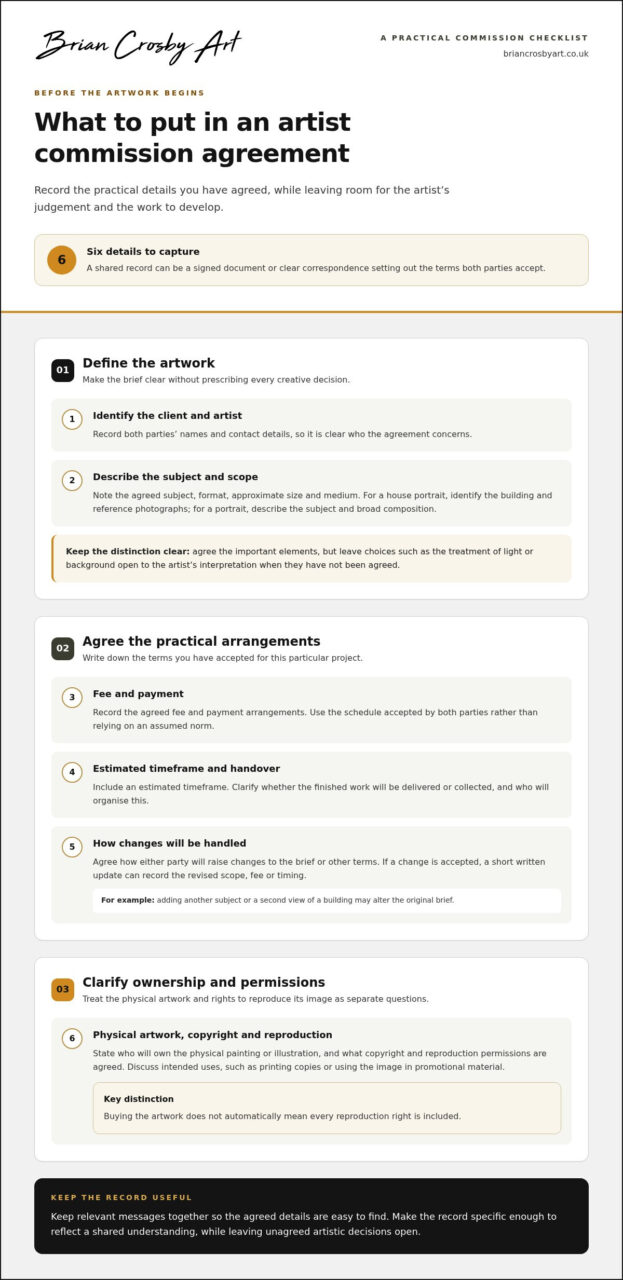
A useful agreement makes the practical shape of the commission easy to understand. This artist commission contract guide offers a buyer-friendly checklist, but the details should reflect the particular artwork and the terms both parties accept. Instead of borrowing a generic template unchanged, make sure the record describes this project clearly.
Start by recording:
- The names and contact details of the client and artist.
- The subject and agreed description of the artwork, including its format, approximate size and medium.
- The fee and payment arrangements agreed for the project.
- The estimated timeframe, plus who is responsible for delivery or collection.
- How either party will raise changes to the brief or other agreed terms.
- Who will own the physical artwork, and what copyright and reproduction permissions are agreed.
These points are a prompt for discussion, not a fixed legal form. Be specific enough for the record to be useful, while leaving unagreed artistic decisions open to the artist’s judgement.
Describe the artwork and the agreed scope
Name the subject, format, approximate dimensions and medium. For a house portrait, identify the building and note which photographs or other references will inform the image. For a portrait, describe the intended subject and broad composition, such as a head-and-shoulders view or a wider scene. Distinguish these agreed elements from details, such as the treatment of light or background, that remain for the artist to interpret.
Record fees, timing, delivery and changes
Write down the agreed fee and payment points for this commission. There’s no single schedule that suits every project, so record the arrangement you have accepted rather than relying on an assumed norm. Add an estimated timeframe and clarify whether the finished work will be delivered or collected, and who will organise this.
Plans can change. Agree how you’ll communicate if timing or circumstances shift, and discuss requests that expand or alter the original brief. Once both parties accept a change, a short written update can capture the revised scope, fee or timing. This helps prevent a small request, such as adding another subject or a second view of a building, from becoming an unspoken expectation.
Separate artwork ownership from copyright
Owning the physical painting or illustration and having permission to reproduce its image are separate questions. Make the agreement clear about the original artwork itself, and discuss intended uses of reproductions, such as printing copies or using the image in promotional material. Don’t assume that buying the artwork automatically grants every reproduction right.
Copyright and contract wording can have legal consequences, so check current UK guidance before relying on a particular clause or assumption. This checklist is a practical starting point, not legal advice; where rights are especially important, get advice suited to your circumstances. For a commission shaped around a particular person or place, explore bespoke portrait and architectural commissions and consider the subject and scope you want to discuss.
Do commission contracts limit creativity or protect both sides?
A clear agreement doesn’t need to map every brushstroke, colour choice or shift in light. It can set out the parts of the commission that matter to both parties, while leaving room for the artist to make creative decisions. This artist commission contract guide is about finding that balance: enough clarity to work from, without turning an imaginative project into rigid instructions.
Vague expectations can leave a client unsure whether the finished piece will reflect the subject they had in mind. An artist, meanwhile, may discover that the client expected extra elements or a different format that wasn’t part of the original discussion. These misunderstandings aren’t inevitable, but a shared record can make the boundaries easier to see and discuss.
Informal messages versus a clear written record
Messages can feel natural and convenient, especially during early conversations. A consolidated summary is easier to revisit as the project develops. Neither approach automatically tells the whole story: what matters is whether both parties can identify the current terms they’ve accepted. The comparison below shows practical trade-offs, not a judgement that one form suits every commission.
- Informal messages: conversational and easy to exchange, but details may sit across several conversations. If the brief changes, it can take effort to identify which version reflects the latest shared decision.
- A consolidated written record: brings the agreed points together for easier reference. It takes care to prepare, but helps both client and artist remember what was settled and what remains open.
For instance, a client might initially mention a particular view of a building, then send references showing another angle. Bringing the accepted choice into one summary helps prevent either person relying on an earlier message by mistake. Informal correspondence can still be useful; the aim is to make the agreed position clear.
Keep artistic judgement within agreed boundaries
Separate essential requirements from creative choices. The subject, format and must-have features might be agreed in advance; the handling of texture, atmosphere or small compositional details can remain with the artist. For a portrait, you might specify who should appear and the intended composition, while trusting the artist to interpret expression and light.
A helpful brief can distinguish between:
- Fixed points: details that define the commission, such as the chosen subject or agreed format.
- Creative freedom: decisions the artist can make in shaping the image, such as how to suggest a building’s character or arrange supporting details.
- Open questions: aspects either party may want to discuss further before they’re settled.
A review point can be useful if it suits the project and both parties agree to it. It needn’t become a demand for constant approval. If a request leads to an agreed change, record the updated understanding so everyone can move forward with confidence. Clear boundaries and flexibility work together: they give the artist space to create and the client reassurance that the central idea is understood.
How to agree commission terms before the artwork begins
A good commission conversation moves from the feeling behind the idea to the practical choices that will shape the work. You don’t need to arrive with every detail settled. Explain what matters, hear the artist’s perspective and resolve the key points together before work starts. This artist commission contract guide offers a straightforward sequence, not legal advice.
Turn the initial idea into a useful brief
Begin with the subject and why you’d like it represented. Is the artwork for a particular room, occasion or person? Share the preferred format and essential details, then gather photographs or contextual material that helps convey what you have in mind. For an architectural illustration, that might include reference views of the building; for a portrait, images that communicate the subject’s character.
Separate firm requirements from preferences. You might feel strongly about including a recognisable doorway, while remaining open to the artist’s interpretation of the light or surrounding details. This gives the artist useful direction without asking you to plan every creative choice.
From there, work through the conversation in order:
- Share the idea and references. Explain the subject, intended setting or occasion, and the details that give it meaning.
- Shape the scope together. Agree the artwork’s format and essential features, and identify what can remain open to artistic judgement.
- Discuss practical terms. Talk through the fee, payment arrangements, expected timing and delivery or collection responsibilities. Focus on the terms for this commission rather than assuming a standard arrangement.
- Clarify rights and permissions. Discuss ownership of the physical artwork and any permission to reproduce its image, so expectations are explicit.
- Gather the agreed points. Put the shared understanding in writing before work begins, allowing both parties to review it calmly.
Review, resolve and record the agreed terms
Before treating the terms as settled, read the summary from the other person’s point of view. Is the subject specific enough to recognise? Are the fee, timing and responsibilities understood in the same way? If a phrase could mean different things, pause and clarify it together. This review can be more helpful than adding pages of formal language.
Once the details are agreed, keep them in one clear written record, such as a document or a concise summary in correspondence. If the brief changes later, discuss the effect on the work and practical terms, then record what you both accept. That way, a new idea can be welcomed without leaving either person unsure which version they’re working from.
A thoughtful initial conversation is also a natural way to explore a bespoke artwork. Explore Brian Crosby Art’s portrait and architectural commissions and consider the subject, references and details you’d like to bring to a commission discussion.
Commission bespoke artwork with clear expectations
A useful agreement grows from the artwork itself. For a bespoke portrait or architectural illustration, the subject, references and intended format help define what you and the artist are working towards. The artist commission contract guide checklist isn’t a script to follow word for word; it helps make sure both sides understand the important decisions for the project.
Apply the agreement checklist to a bespoke commission
Imagine commissioning an illustration of a house that has been part of your family for years. Identify the building, share reference photographs and describe which features give it meaning, such as a distinctive roofline or garden entrance. Discuss the intended format and what matters most to you, while leaving choices about atmosphere and artistic treatment open.
For a portrait, the brief could identify who the artwork should depict, the preferred composition and any essential details. You might want a particular expression or setting to come through, while trusting the artist’s judgement in how to capture it. Separating must-haves from preferences helps the artist understand the heart of the commission without narrowing the creative possibilities.
Brian Crosby Art creates bespoke architectural illustrations and portrait commissions. The fee is tailored to the project, taking into account the artwork’s complexity, size and medium. Brian Crosby is a recognised member of the Society of Architectural Illustrators, a relevant part of his professional background.
There’s no one set of terms that suits every artwork. The final written record should reflect the project you’ve discussed and the terms you and the artist have mutually accepted. For one commission, references and composition may be central; for another, delivery arrangements or permissions for reproducing the image may need careful attention.
Take a considered next step
Before starting a conversation, gather reference material that helps show the subject clearly. Note where you hope to display the artwork or the occasion it’s intended for, then consider which details are essential and where you’d welcome the artist’s interpretation. You don’t need to have every answer. A thoughtful first discussion can clarify the idea and the practical questions that follow.
As you explore a commission, keep the conversation open and give yourself time to understand the proposed scope and terms. Clear expectations can support a relaxed creative relationship, with both client and artist able to return to the same understanding as the work takes shape.
Explore bespoke artwork commissions and begin a conversation about the portrait or architectural illustration you have in mind.
Let your commission begin with a clear idea
The first step doesn’t need to be a polished brief. Start with the image you hope to live with: a familiar face, a building that holds meaning, or a particular moment you’d like to remember. A few reference images and notes about what matters most can give an initial conversation a warm, practical starting point.
Brian Crosby creates bespoke architectural illustrations and portrait commissions, bringing his experience as a recognised member of the Society of Architectural Illustrators to this work. Use the ideas in this artist commission contract guide to approach the conversation with greater confidence, while leaving space for the artwork to take its own creative shape.
When you’re ready, explore bespoke artwork commissions and begin imagining what a meaningful piece could become. A clear beginning can make room for a thoughtful, rewarding collaboration.
Frequently Asked Questions
Is an artist commission contract legally binding in the UK?
It can be, if the circumstances show that both parties agreed to the terms and intended to enter a contract. A signature isn’t the only factor that may matter, and whether an agreement is legally binding depends on the details. Keep a copy of the agreed brief and messages, and make sure important conditions are clear. This general information isn’t legal advice; seek advice for a specific dispute or uncertainty.
Can an email agreement count as an artist commission contract?
Yes, an email exchange can record an agreement if it clearly shows the terms accepted by both parties. For example, messages could confirm the subject, agreed format, fee and expected timing. Keep the full thread, including later changes, rather than saving only one message. This artist commission contract guide is a practical resource, but an email’s legal effect depends on its context and wording.
Who owns the copyright to commissioned artwork in the UK?
Usually, the artist who creates the work is the first copyright owner, unless an exception applies or copyright is transferred. UK copyright law distinguishes ownership of the physical artwork from copyright in its image. A transfer of copyright generally needs to be in writing and signed by the person transferring it. If you need to reproduce the artwork, agree the permitted uses clearly rather than assuming purchase includes them.
What happens if a client cancels an art commission?
Check the agreed cancellation terms and discuss the decision with the artist promptly. The outcome may depend on what work has already been completed, what the agreement says and how the commission was arranged. Don’t assume a deposit is automatically kept or refunded in every case. Consumer cancellation rights can also depend on the circumstances, including whether the artwork is personalised, so seek current UK consumer guidance if you’re unsure.
Should an artist ask for a deposit before starting a commission?
A deposit can be one way to arrange payment, but there’s no single deposit amount or schedule that suits every commission. Before paying, make sure the amount, when it’s due and how cancellation affects it are set out clearly. Ask for confirmation of the total fee and any later payment points too. Clear terms help both sides understand the financial commitment before the artist begins creating the work.
Can an artist show commissioned artwork in a portfolio?
Discuss this before the work is shared publicly. Copyright ownership and permission to display an image are related but distinct considerations, and a client may have privacy or confidentiality concerns, particularly for a personal portrait or a private property. Agree whether the artist may photograph or show the finished piece, and whether any limits apply to timing or context. Record the arrangement so both parties know what has been permitted.
What should I do if a commissioned artwork is different from the agreed brief?
Raise the concern calmly and promptly, referring to the specific agreed details rather than relying only on a general feeling that the piece is wrong. Explain which element differs, such as the subject, format or agreed feature, and share relevant messages or references. Ask the artist to discuss the difference with you. The next step depends on the agreement and circumstances; a preference about artistic interpretation may differ from an unmet agreed requirement.