


What if the most daunting part of owning a bespoke piece of art isn’t choosing the subject, but simply deciding what to pay for it? It’s a common hurdle that many art lovers face. You might worry about overpaying or, perhaps worse, offending a skilled painter with a figure that doesn’t reflect their years of dedication. Setting a realistic budget for a commissioned painting whilst respecting the value of professional architectural or portrait skill often feels like a delicate dance.
This 2026 guide simplifies that process for you. You’ll learn how to plan your investment so that your final piece becomes a cherished heirloom, capturing the atmospheric beauty and character you desire. We’ll explore why prices vary between mediums like oil and watercolour, identifying hidden costs such as delivery and creative framing. By the end, you’ll have a clear framework and the confidence to start a warm, productive conversation with your chosen artist.
Key Takeaways
- Understand why bespoke art is a lasting legacy, moving beyond generic prints to capture the unique character of your family home or milestones.
- Learn how to balance your budget for a commissioned painting by selecting the right medium and dimensions for your specific vision.
- Discover how providing clear reference photography can assist the artist and potentially enhance the detail of your final piece.
- Recognise the importance of including professional creative framing in your initial plans to ensure your investment is beautifully protected and presented.
- Gain the confidence to start a tranquil, collaborative journey with a mentor who values your personal connection to the artwork.
The Value of Bespoke Art: Why Commission a Painting?
High-street stores offer endless prints that look identical in every home. They’re convenient, but they don’t tell your story. When you begin to consider the budget for a commissioned painting, it’s helpful to first recognise the lasting value of an original piece. You’re choosing to preserve a slice of your own history. Whether it’s the warm glow of the sun on your first family home or the specific character in a loved one’s expression, a bespoke work captures what a camera often misses.
Original paintings possess an atmospheric quality that digital reproductions cannot mimic. You can see the deliberate marks of the brush and the way light interacts with the layers of pigment. This tangible texture creates a presence in a room, turning a simple wall into a focal point of quiet reflection. It’s a unique legacy that stays within the family, growing more meaningful as the years pass. Validating your desire for something more personal than mass-produced decor is the first step in the creative journey.
A Personal Connection to the Creative Process
Seeing your memories translated through a professional artist’s eye is a deeply rewarding experience. It isn’t just about the final canvas. It’s about the collaborative journey you take together. This supportive process makes commissions a favourite choice for marking significant anniversaries or preserving heritage estates. When you establish a budget for a commissioned painting, you’re engaging in a partnership that ensures the finished work resonates with your personal narrative. The joy of the process adds a layer of meaning that you simply won’t find in a shop-bought frame.
Investing in Professional Standards
Quality matters when you’re creating a piece intended to last for generations. Working with a member of the Society of Architectural Illustrators ensures a level of technical precision that a hobbyist might struggle to achieve. There’s a distinct difference in the approach of a qualified art educator who understands the chemistry of professional-grade materials. Using lightfast pigments and archival surfaces ensures the colours remain vibrant whilst the structure of the piece stays sound. This commitment to professional standards protects your investment and ensures the atmospheric beauty remains untarnished by time. Choosing an artist who prioritises these standards means your artwork will be enjoyed by your children and grandchildren alike.
Key Factors That Influence the Budget for a Commissioned Painting
Planning the budget for a commissioned painting involves more than simply measuring a space on your wall. Whilst physical size is a factor, the complexity of your vision dictates the artist’s journey from the first sketch to the final brushstroke. A large, atmospheric landscape might actually require fewer studio hours than a small, intricately detailed house portrait. Understanding these variables helps you align your expectations with the artistic process.
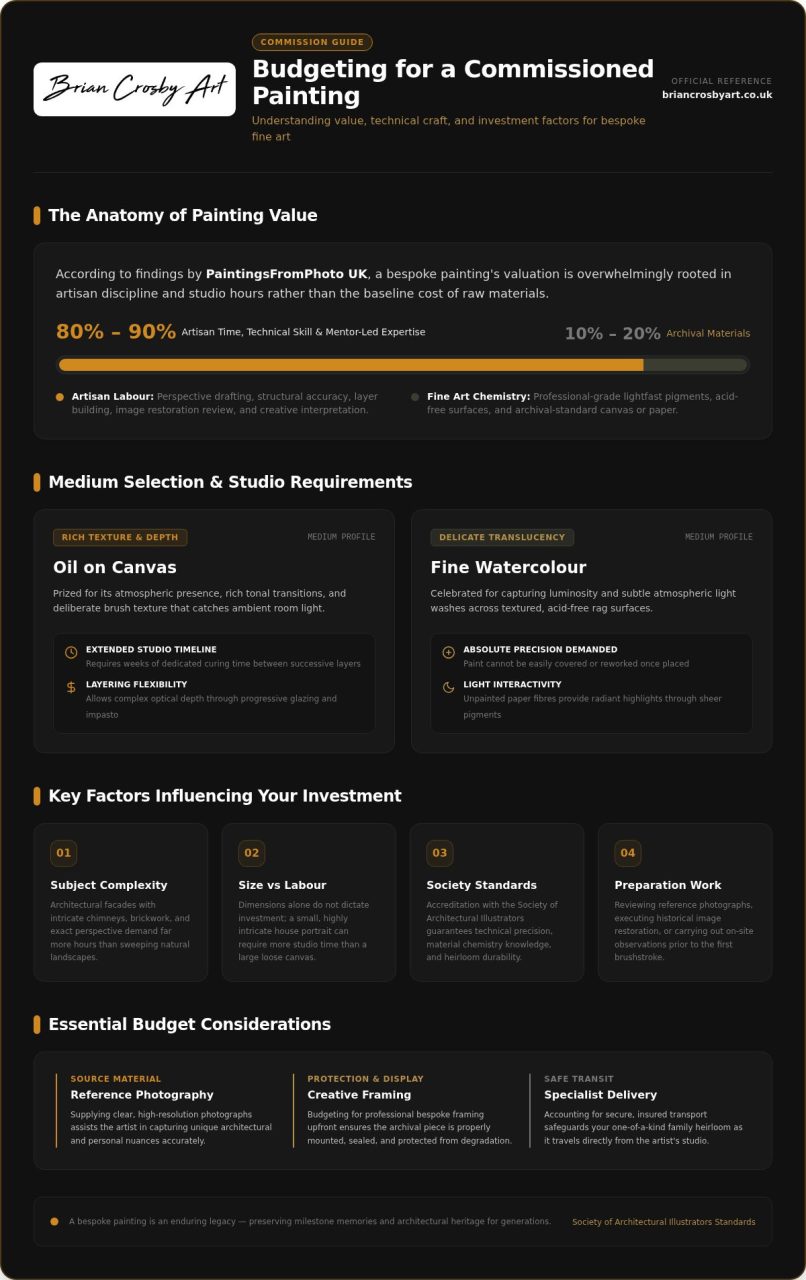
The choice of medium significantly affects the timeline and technical approach. Oils are prized for their rich texture and depth, but they require weeks of curing time between layers. Watercolours offer a delicate translucency that captures light beautifully, yet they demand absolute precision because the paint cannot be easily layered over. Each medium brings its own set of technical demands and material requirements that shape the final investment.
Subject matter complexity is perhaps the most overlooked influence on cost. A sweeping view of a garden focuses on mood and colour. Conversely, an architectural facade requires rigorous attention to perspective and structural accuracy. Every window pane, chimney stack, and brick texture adds to the labour involved. Sometimes, the work begins long before the brush touches the canvas. Reviewing old photographs for image restoration or conducting site visits ensures the final piece captures the true character of a property.
Understanding the Artist’s Time and Labour
Professional architectural illustration is a specialised field that blends artistic flair with technical discipline. Capturing a true likeness of a home or a person isn’t a task for the hurried. It requires years of mentor-led training and a refined eye for detail. A 2026 study by PaintingsFromPhoto UK suggests that 80 to 90 percent of a painting’s value reflects this artisan time and expertise rather than raw materials. The labour involved reflects the quiet dedication required to ensure every line is true to the subject’s personality.
Material Quality and Longevity
Longevity is a hallmark of professional work. Using lightfast pigments ensures your painting won’t fade when exposed to the natural light of a sunny sitting room. Archival-quality papers and canvases are essential to prevent yellowing or degradation as the decades pass. These professional-grade materials ensure that your commissioned piece remains a vibrant family heirloom for generations. Whether you prefer the smooth, crisp finish of ink or the tactile, layered surface of traditional oils, the quality of the components is what secures your investment’s future.
Setting Your Budget: Aligning Expectations with Investment
Finding the right budget for a commissioned painting is a personal journey that begins with a clear vision of your desired outcome. Rather than viewing the cost as a rigid barrier, it’s more helpful to see it as a roadmap that defines the scale and complexity of your piece. By aligning your investment with your expectations early on, you ensure a tranquil and rewarding creative process that focuses entirely on the emotional impact of the work.
- Small-scale intimate works: These are often perfect for detailed house portraits or individual character studies. They offer a way to capture a cherished memory in a format that fits beautifully into smaller nooks or gallery walls without requiring vast wall space.
- Mid-range commissions: This tier allows for larger formats and more complex compositions. It might include more of the surrounding landscape or additional architectural features that require more dedicated time in the studio to perfect.
- Large-scale statement pieces: For those seeking high-impact architectural landscapes or family portraits, a larger canvas provides the space needed for sweeping atmospheric beauty and the intricate detail that defines a true focal point.
In some cases, the journey begins with historical material rather than modern photography. If you’re working from faded or damaged family records, professional image restoration is a vital first step. This process helps prepare a clear, detailed brief for the artist, ensuring that the final painting accurately reflects the character and history you wish to preserve. Being clear about these preparatory needs helps you establish a realistic budget for a commissioned painting from the very start of the project.
Defining Your Scope Early
Deciding which features of your subject are most important is an essential part of the planning phase. You might prioritise the intricate stonework of a porch over a wider garden view, or focus on a specific expression in a traditional portrait. Balancing your desire for detail with your available budget requires a bit of thoughtful prioritisation. Being transparent with your artist about your financial boundaries leads to better results. It allows the artist to suggest the best medium and scale to achieve your goals without compromise, ensuring the process remains supportive and encouraging.
The Impact of Framing on Your Total Budget
Bespoke framing is far more than just a decorative finishing touch; it’s a critical component in protecting your investment for the long term. A professional frame provides necessary structural support and ensures the artwork is mounted using archival, acid-free materials that won’t damage the paper or canvas over time. Choosing UV-resistant glass is particularly important for watercolours and ink works, as it prevents vibrant pigments from fading when exposed to natural light. You can explore our bespoke creative framing guide to see how professional presentation enhances the atmospheric presence of your piece whilst ensuring its longevity for future generations.
How to Maximise Your Budget for the Best Artistic Result
Getting the most from your budget for a commissioned painting does not mean cutting corners on quality. Instead, it’s about working smarter with your artist to ensure every penny goes toward the creative execution rather than administrative hurdles. One of the most effective ways to do this is by providing high-quality reference photographs. Clear, well-lit images taken from your favourite angles reduce the time an artist spends on site visits or preliminary research. This allows more of your investment to be focused directly on the atmospheric beauty of the painting itself.
Composition also plays a significant role in efficiency. Rather than requesting a crowded scene with every family member and pet, consider focusing on a specific atmospheric “moment”. A single, beautifully captured house portrait under a setting sun often carries more emotional weight than a busy composition. Additionally, choosing a medium like watercolour or ink can offer a faster turnaround whilst still delivering a deeply evocative result. These mediums capture light with a delicate touch that is perfect for architectural subjects. You might also consider choosing a standard canvas size, as this can often save on the costs associated with entirely bespoke framing components.
Effective Communication with Your Artist
A successful commission relies on a clear, shared vision. Writing a concise brief helps avoid the need for costly revisions later in the process. During your initial consultation, be open about your goals and what you hope to feel when looking at the finished piece. If you’re unsure about the style you prefer, you can use existing limited edition fine art prints as a visual reference point. This helps align expectations and ensures the artist understands the level of detail and mood you desire before the first mark is made.
Planning for the Long Term
Investing in a professional house illustrator ensures a timeless result that won’t feel dated in a few years. Professional standards in perspective and character are what separate a lasting heirloom from a simple sketch. To manage the budget for a commissioned painting effectively, many clients appreciate a multi-stage payment structure. This typically involves a deposit followed by a final settlement upon completion, making the investment more manageable. Finally, think about where the piece will hang. Proper placement away from direct heat or dampness prevents the need for future restoration, protecting your investment for decades to come.
If you are ready to explore your own bespoke project, you can start your commissioning journey today.
The Commissioning Journey with Brian Crosby
The journey of commissioning a piece of fine art should be as tranquil and rewarding as the finished work itself. When you work with Brian Crosby, you aren’t just hiring a technician; you’re engaging with a mentor who values your personal connection to the subject. Brian’s approach strikes a balance between professional expertise and neighborly approachability, making the world of fine art feel accessible rather than exclusive. It’s a supportive process that prioritises your confidence at every stage.
Determining a realistic budget for a commissioned painting is the practical foundation, but the creative journey is where the magic happens. As a member of the Society of Architectural Illustrators, Brian brings a unique blend of technical precision and atmospheric beauty to every project. This ensures that whether you’re commissioning a house portrait or a traditional likeness, the result captures the character and soul of the subject with quiet confidence.
From Initial Idea to Final Varnish
Brian’s unique position as a qualified art teacher means he excels at guiding those who may be new to the creative process. He provides a supportive feedback loop that ensures the work matches your vision precisely. This mentor-led approach helps you articulate your preferences, even if you don’t have the technical vocabulary of the art world. By involving you in the key decisions, from initial composition to the final varnish, the finished piece becomes a true collaboration. For those looking to see how these elements come together in practice, you can read our guide on commissioned house portraits UK for more inspiration and examples of past works.
A Legacy in Every Brushstroke
Quality and longevity are at the heart of everything produced in the studio. Every brushstroke is a commitment to the professional standards that ensure your painting becomes a cherished part of your home gallery. By using archival materials and traditional techniques, Brian ensures that your investment remains as vibrant as the day it was completed. This dedication to craftsmanship means your artwork won’t just be a decorative object; it will be a legacy that tells your family’s story for generations to come. When you set your budget for a commissioned painting, you’re investing in this enduring quality and the peace of mind that comes with professional expertise.
Ready to begin? Contact Brian Crosby today to discuss your vision and take the first step toward your bespoke project.
Bringing Your Artistic Vision to Life
Selecting a realistic budget for a commissioned painting is the essential first step in a rewarding creative journey. By understanding how medium, scale, and architectural complexity influence an artist’s time, you can align your investment with the atmospheric result you desire. High-quality materials and professional techniques aren’t just details; they’re the foundation of an heirloom that will tell your story for generations. Whether you’re capturing the character of a family home or the unique expression of a loved one, the process should be as tranquil as the final work.
As a Member of the Society of Architectural Illustrators and an expert in traditional portraiture and architectural landscapes, Brian Crosby offers a supportive, mentor-led approach. With bespoke framing and restoration services available, every aspect of your project is handled with quiet confidence and professional care. You don’t need to be an art expert to start this conversation; you simply need a memory worth preserving. Discuss your bespoke commission with Brian Crosby today to explore the possibilities for your home. It’s a wonderful way to celebrate your personal history through the enduring beauty of fine art.
Frequently Asked Questions
How much does a typical commissioned painting cost in the UK?
UK market rates for bespoke art in 2026 generally fall into three distinct tiers. Small studies or works by emerging artists often range between £150 and £800. Mid-career studio pieces for standard home sizes typically sit between £800 and £3,000. For established gallery artists or complex society portraits, the investment can exceed £12,000. These figures reflect the artist’s expertise and the significant time required to capture a subject’s unique character.
Is a deposit required before the artist starts work on my commission?
Yes, paying a non-refundable deposit is standard practice across the UK art industry. This typically ranges from 30% to 50% of the total fee and is settled upon signing the formal brief. This initial payment secures your place in the artist’s schedule and covers the cost of specialist materials required for your piece. It ensures a committed, collaborative partnership from the very beginning of the creative journey.
How long does the commissioning process usually take from start to finish?
Most bespoke paintings take between 3 and 12 weeks to complete from the initial agreement. This timeline allows for careful reference gathering, preliminary sketches, and the actual application of paint. Traditional oils often sit at the longer end of this scale due to the necessary curing time between layers. Your artist will provide a more precise estimate based on your specific requirements and their current studio commitments.
Can I commission a painting from a low-quality or old photograph?
You certainly can, though it often requires an additional step to ensure a high-quality result. If your reference material is faded or damaged, professional image restoration can help reconstruct lost details before the painting begins. This provides the artist with a clear guide to capture the true character of the subject. Starting with a restored image helps you set a more accurate budget for a commissioned painting by reducing guesswork.
Does the price of a commission include the cost of a frame?
The initial quote for the artwork usually covers the painting itself rather than the frame. Because framing is a personal choice that should complement both the art and your home’s decor, it is typically treated as a separate service. Professional bespoke framing in the UK often adds between £65 and £250 to your total investment. This ensures your piece is protected with archival materials and UV-resistant glass.
What happens if I want to make changes once the painting has started?
Minor adjustments are often possible during the early stages, but significant changes to the composition can impact the project’s timeline and cost. Most artists use a milestone-based process where you approve a preliminary sketch before the final paint is applied. This collaborative approach ensures the work aligns with your vision from the start. Clear communication during the initial consultation is the best way to avoid the need for later revisions.
Are there any additional costs like delivery or insurance I should budget for?
You should typically allocate roughly 5% to 10% of your total budget for a commissioned painting toward tracked and insured transport. Whilst some artists offer free delivery on orders over a certain value, larger or more fragile canvases may require specialist packaging. It’s also worth checking if the artist is VAT registered, as this could add 20% to the invoice if their turnover exceeds the current £90,000 threshold.
Why are oil paintings generally more expensive than watercolours?
Oil paintings command a higher investment primarily due to the extensive labour and drying times involved. A standard oil piece might require 25 to 40 hours of direct work spread over several months, as layers must cure before the next can be applied. Watercolours and acrylics are often more cost-effective because they dry rapidly. This allows the artist to complete the work in a shorter timeframe without compromising on the atmospheric beauty of the subject.