


What if the safest way to repair a torn photograph is not to touch the print at all? If you’re asking, “can a ripped photo be repaired?”, the answer is often yes, but that doesn’t mean every tear can be made invisible or that the original should be handled straight away. A clean split, a missing corner and a brittle print each call for a different approach.
It’s natural to worry that a quick fix could leave glue marks, distort the paper or damage the details that make the photograph meaningful. In many cases, restoration means digitising the print and editing a copy of the image, leaving the original untouched. The right option depends on the type of damage, the print’s condition and what you want to preserve.
This guide explains which kinds of damage may be repairable, how to protect a fragile photograph and when digital editing or specialist advice may be useful. You’ll also find practical questions to ask before commissioning restoration, so you can decide what to do next with care.
Key Takeaways
- Wondering “can a ripped photo be repaired”? The likely result depends on the tear, the photograph’s condition and whether you want the print or a digital image restored.
- Physical conservation, digital editing and making a replacement print are different approaches. Consider the photo’s material and how you hope to use it.
- Before attempting a repair, handle the photograph as little as possible, support it from underneath and store it safely.
- For a precious or fragile original, compare the risks of DIY editing with seeking specialist advice before deciding what to do.
- Before commissioning restoration, ask about the proposed method, likely outcome, limitations and whether the work affects the original.
Can a ripped photo be repaired? What the damage can tell you
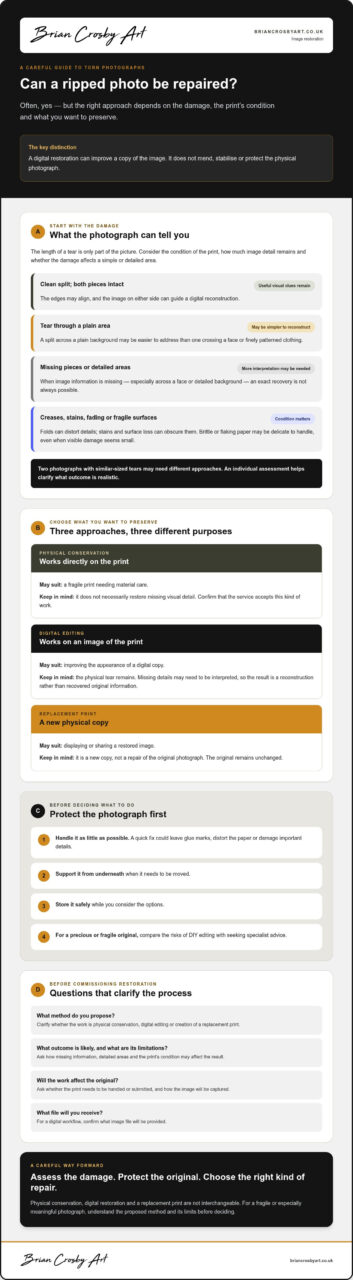
A torn photograph can often be improved, but the result depends on more than the length of the tear. The print’s condition, how much image detail remains and the method used all matter. A clean split through a plain area may be easier to address than a tear through a face or detailed background. If part of the photograph is missing, a restorer may need to interpret what belongs there, so an exact recovery isn’t always possible.
Look beyond the tear itself. A crease can distort details, while stains or surface loss may obscure them. Fading can make the original colour and contrast harder to judge. Brittle or flaking paper may also be delicate to handle, even if the visible damage seems small. An individual assessment is the best way to understand what outcome is realistic.
Which types of photo damage are usually easier to address?
A clean tear with both pieces intact provides useful visual clues. The edges may align, and the image on either side can guide a digital reconstruction. Missing fragments leave less information to work from. Folds, stains and worn or lifted photo surfaces can add further uncertainty. These factors don’t determine the result by themselves, but they help explain why two photographs with similar-sized tears may need different approaches.
For example, a split across a plain background may be simpler to reconstruct than one crossing a person’s eyes or finely patterned clothing. Even in a straightforward case, don’t assume the result before the image has been assessed.
What does “repairing a photograph” actually mean?
People may use “repair” to mean two different things. Physical repair or conservation involves work on the original print to address its material condition. Check directly whether a particular service accepts this kind of work. Digital restoration means editing a scan or photograph of the print. It can improve a copy of the image, but it doesn’t mend, stabilise or protect the physical photograph.
This distinction is central to Conservation and restoration of photographs, which discusses the care and treatment of photographic materials. If the original is fragile or especially meaningful, ask what the proposed process involves and whether it affects the print. Brian Crosby Art offers image restoration, but confirm directly which originals or digital files can be considered before commissioning work. Clarifying this first helps you choose a suitable next step without treating digital improvement and physical repair as interchangeable.
How torn-photo restoration works: physical repair versus digital reconstruction
Restoration can mean different things, and the right choice depends on the photograph’s material, condition and intended use. Physical conservation addresses the print itself. Digital editing works on an image of the print. A replacement print is a new physical copy, not a repair of the original. These options can complement one another, but they don’t solve the same problem.
| Approach | Effect on the original | May suit | Key limitation |
|---|---|---|---|
| Physical conservation | Works directly on the print | A fragile print needing material care | Doesn’t necessarily restore missing visual detail |
| Digital editing | Leaves the print unchanged | Improving the appearance of a digital copy | Doesn’t mend or stabilise the original |
| Replacement print | Original remains unchanged | Displaying or sharing a restored image | It’s a new copy, not the original photograph |
Can a torn photo be restored digitally?
Digital editing can often make a torn image look more continuous by aligning visible edges or reconstructing a small damaged area in a copy. If a fragment is missing, the original detail is no longer available. A restorer may need to interpret what belongs there, especially across a face, clothing or a detailed background. The result may look convincing, but it remains a reconstruction. The physical tear is still present on the print.
Scanning or photographing the original may be part of a digital workflow, but studios can use different processes. Ask how the image will be captured, what file you’ll receive and whether the original needs to be handled or submitted. Brian Crosby Art offers image restoration. You can ask about image restoration and explain what kind of damage you’d like addressed.
When might physical conservation be needed?
A brittle, flaking or especially significant print may need care for its physical condition, not just changes to its appearance in a digital file. Stabilising a print and reconstructing its image are separate aims. If you’re considering physical treatment, seek an assessment before attempting a repair yourself. The Library of Congress offers guidance on how to protect it before repair. Its handling advice can help you avoid unnecessary contact while you decide what to do.
In short, asking “can a ripped photo be repaired” is only the starting point. Decide whether you want the original conserved, a digital image improved or a new print made, then check which of those options a restoration provider accepts.
DIY or professional photo restoration: how to compare your options
The best next step depends on the photograph’s condition and how much risk you’re comfortable taking. Editing a digital copy is different from altering the only print. Physical conservation is different again because it involves the original material. If you’re asking, “can a ripped photo be repaired?”, first decide whether your priority is improving the image, protecting the print or both.
| Option | May suit | Consider |
|---|---|---|
| DIY digital edit | A copy with minor, clearly visible damage | Work on a duplicate file, not the only original |
| Specialist digital restoration | Damage that needs careful image reconstruction | Ask what details can be restored and what must be interpreted |
| Physical conservation | A fragile or valuable print needing material care | Check the conservator’s experience with photographs and proposed treatment |
When is a careful DIY approach reasonable?
If you have a duplicate or digital copy and the damage is minor, a cautious edit can be a reasonable first step. Keep an untouched scan or photograph of the image before making changes. Work on a separate copy so you can return to the original file at any time. If you’re unsure how to capture a fragile print safely, don’t risk handling it just to try an edit.
Leave the physical photograph alone. Household adhesives and sticky tape can leave residue or cause further damage. Rubbing, trimming and aggressive cleaning can also worsen a tear or weakened surface. A small mark may look tempting to remove, but an irreversible attempt on the print can limit your options.
When should you ask a restoration professional?
Seek advice before experimenting if the photo is brittle, extensively damaged, valuable or emotionally irreplaceable. An assessment can clarify what may be improved, what detail cannot be recovered and whether the proposed work is digital, physical or both. Ask how the original will be handled, whether any treatment will change it and what files or finished items you should expect.
Brian Crosby Art offers image restoration, but confirm directly which formats and types of damage can be considered before commissioning work. Describe the tear and the print’s condition, then ask what outcome may be feasible. A clear conversation helps match the restoration to the photograph without assuming that every method is available or that all damage will disappear.
What to do with a torn photo: protect it before repair
Pausing before you act can protect a photograph from further harm. Before trying to bring the torn edges together or clean a mark, handle it as little as possible and make a note of the damage. These steps help preserve your options while you decide whether to protect the original, improve a digital copy or explore both.
- Pause. Don’t use tape, glue, cleaning products or household repair methods.
- Handle gently. Use clean, dry hands and support the photograph from underneath. Avoid pulling the torn edges into alignment.
- Document. Note what’s torn, whether any pieces are missing and any known details about the photograph.
- Store safely. Place the print and any loose fragments in a protective enclosure, keeping the fragments together but unattached. Choose a clean, dry, stable place away from direct sunlight, heat and damp.
- Seek advice. If the photograph is fragile or precious, ask a restoration specialist what may be possible before attempting a repair.
How should you handle and store a torn photograph?
Move slowly and touch the photograph as little as possible. If it’s on a table, slide support underneath rather than lifting it by a torn edge. Keep loose pieces in the same enclosure as the print so they don’t get lost, but don’t stick them down or force them into place. Avoid rubbing or trimming the paper. Heat, bright light and moisture may worsen its condition, so choose a sheltered spot while you arrange the next step.
For more guidance on caring for a damaged print, read this professional image restoration guide.
What information helps an expert assess the damage?
A clear description gives a specialist a useful starting point. Share the photograph’s approximate age, any materials you know about, where the tear runs and whether pieces are missing. Mention other visible changes, such as creasing, fading or flaking. If requested, provide clear images of the front, back and damaged area. Don’t risk handling a brittle original just to take pictures; ask how the specialist would prefer to assess it.
Be clear about your goal, too. You may want to preserve the physical print, improve a digital copy or explore both. Brian Crosby Art offers image restoration, though you should confirm which originals or files can be considered first. If you’re looking into this option, ask about image restoration and describe the damage and outcome you have in mind. An assessment can help you understand whether the photograph may be improved and what limitations to expect.
Professional repair for a ripped photo: what to ask before commissioning
Before agreeing to restoration, ask for an assessment that explains the proposed method, likely outcome and limitations. A useful discussion should clarify whether the work would affect the original, whether missing details can be recovered or must be interpreted, and how the photograph will be handled. This helps you decide whether the approach suits both the print and what you hope to preserve.
Questions to ask before agreeing to restoration
Keep the conversation practical. You might ask:
- What can be improved? Ask which damaged areas are likely to be addressed and where reconstruction would involve interpretation, particularly if part of a face or another important detail is missing.
- What kind of work is proposed? Confirm whether it’s physical work on the print, digital restoration of an image or another agreed service. These approaches have different effects.
- Will the original be changed? Ask how it will be handled and whether the proposed work could alter its condition.
- What will I receive? If a digital copy is part of the agreed work, clarify how it will be supplied. Ask whether the original print or any other materials will be returned.
These questions are especially helpful if you’re uncertain whether can a ripped photo be repaired means mending the print itself or creating an improved image. Ask for a realistic description of the likely result, not a promise that all signs of damage will disappear.
How to enquire about Brian Crosby Art’s image restoration
Brian Crosby Art offers image restoration, but confirm directly which photographs and types of damage can be considered, and what methods are available. You can start by describing the tear, the print’s condition and what you hope to achieve. Explain whether your priority is the physical original, a digital image or simply understanding what may be feasible. Ask whether the photograph is suitable for assessment and how the studio would prefer to review it.
If you’d like to prepare, read the professional image restoration guide for further context. Then explore Brian Crosby Art and enquire about image restoration, including what kinds of work the studio can consider. A clear, unhurried conversation can help you choose a next step without committing before you understand the likely outcome.
Choose a careful next step for your photograph
So, can a ripped photo be repaired? Many can be improved, but the right approach depends on the print’s condition, the extent of the damage and what you hope to preserve. Digital restoration can change the appearance of an image without mending the original, while physical conservation addresses the print itself. They aren’t interchangeable.
Before deciding, handle the photograph as little as possible and avoid home repairs that could make the damage worse. If it’s fragile or especially meaningful, ask for an assessment and clarify what may be improved, what remains uncertain and whether the proposed work affects the original.
Brian Crosby Art offers image restoration. Brian Crosby is an artist and educator, and you can ask whether the service may suit your photograph without assuming a particular method or outcome. Describe the damage and what you’d like to achieve, then explore Brian Crosby Art and enquire about image restoration.
A torn print can feel daunting, but you don’t have to rush into a repair. Handle it carefully, ask clear questions and choose the next step that best fits what you want to preserve.
Frequently Asked Questions
Can a ripped photo be repaired completely?
If you’re asking “can a ripped photo be repaired” completely, the honest answer is that this can’t be guaranteed. A tear may be made less noticeable, but missing paper or damaged image detail may mean some areas have to be interpreted rather than recovered. The likely result depends on the print’s condition and whether the proposed work is physical or digital. Ask for an assessment and a realistic explanation of what may be achieved before deciding.
Can I fix a torn photograph at home?
You can protect a torn photograph at home, but avoid gluing, taping, trimming or cleaning the original. These actions can leave residue or cause further damage. If you’d like to try visual repairs, work on a scan or photograph of the print and keep an untouched copy so you can start again. For an irreplaceable or fragile photo, don’t experiment on the original. Ask a restoration professional for advice first.
Is digital restoration the same as repairing the original photo?
No. Digital restoration changes a scan or photograph of the print; it doesn’t mend the physical tear. Physical repair involves work on the original and brings different considerations for the photograph’s material and condition. A digital version may be useful for sharing or making a copy, but it won’t stabilise the print. Before commissioning work, ask what method is proposed, whether the original will be affected and what digital files or materials you’ll receive.
What happens if part of the photograph is missing?
If a piece is missing, some image information is no longer present on the print. Digital restoration may recreate the appearance of the lost area, but those details are an interpretation, not recovered original information. What may be possible depends on the size and location of the gap and the visible detail around it. Ask for an honest assessment, especially if the missing section includes a face or another important feature.
Should I scan a ripped photo before sending it for repair?
A digital record can help document the damage, but don’t force a brittle photograph flat or put it through a feeder scanner. If the print seems safe to handle, you could photograph it gently on a clean, flat surface without pulling the torn edges together. If it’s fragile or valuable, ask the restoration professional how they’d like to assess it before attempting to scan or move it.
Can an old, brittle photograph still be restored?
It may be possible to improve or stabilise an old photograph, but brittleness can make handling risky. Age alone doesn’t determine what can be done; the materials, overall condition and type of damage also matter. Don’t attempt to mend or clean a fragile print yourself. Ask a professional to assess it and explain whether physical conservation, digital restoration or another approach may suit your photograph.
How do I choose between DIY and professional photo restoration?
Consider how precious the photograph is, how fragile it feels and whether you want the original addressed or a digital image improved. Keep DIY editing to a copy, never the only original. If the print is irreplaceable, brittle or extensively torn, seek professional advice before attempting repairs. Ask what may be achieved, what limitations to expect and how the proposed process will protect the original.